
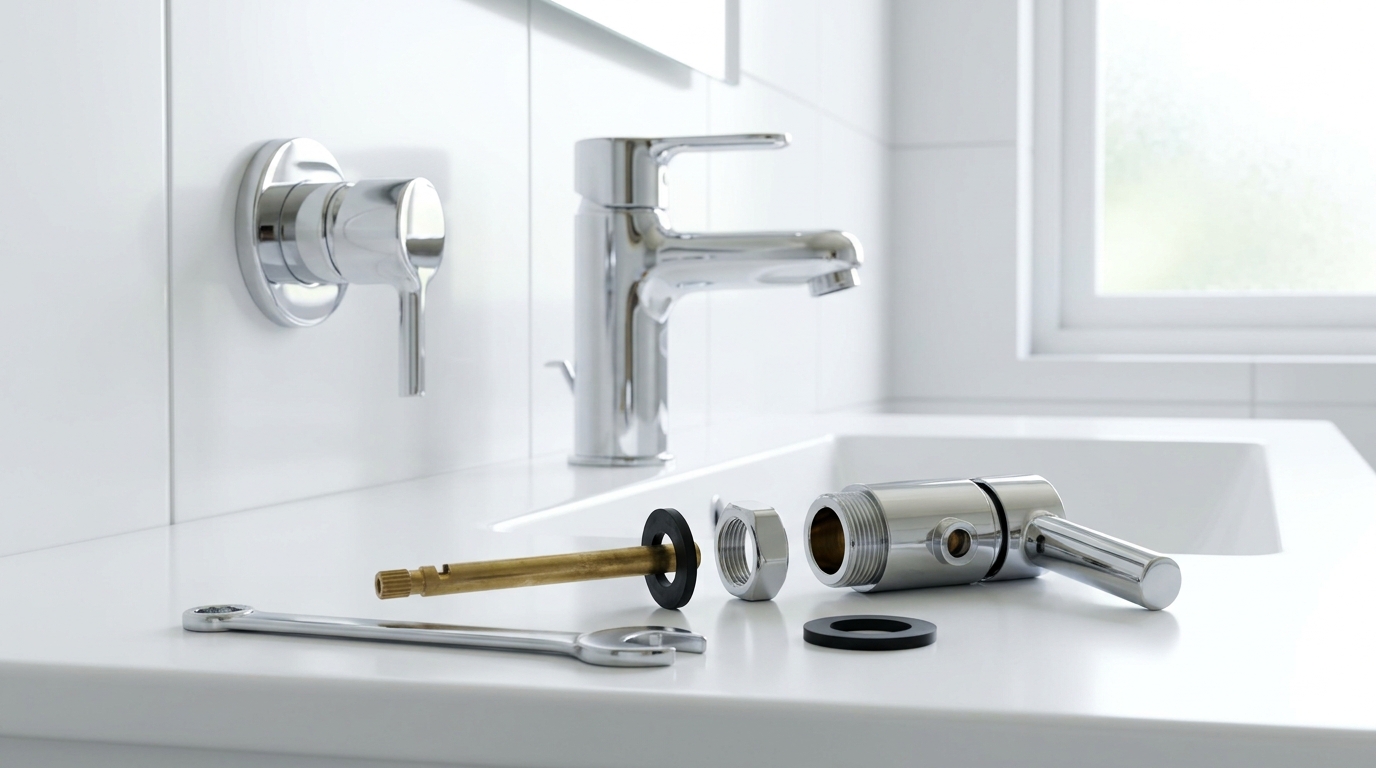
How to Service a Spindle Tap in 2026: Step-by-Step Guide
Introduction: When Your Spindle Tap Starts Leaking
In older residential colonies like Alkapuri in Vadodara or Indiranagar in Bangalore, a dripping tap is one of the most common complaints homeowners deal with — and in most cases, the culprit is a worn-out spindle inside the tap body. A proper spindle tap service and replacement India 2026 can stop that drip completely without replacing the entire tap fitting. Before you call a plumber and pay ₹300–₹600 just for a visit, it is worth knowing that most spindle tap issues can be resolved at home with basic tools and a genuine replacement spindle.
Whether your tap is dripping at the spout, leaking around the handle, or has become stiff to operate, the spindle assembly is almost always the first component to inspect. You can shop compatible water tap spindles for all major Indian brands and get them delivered to your door before the next plumber visit. This guide walks you through everything — from diagnosing the problem to servicing the tap yourself.
2026 Price Guide: Spindle Tap Parts & Service Costs in India
Understanding what you should pay for a spindle tap service in 2026 helps you avoid being overcharged by local hardware shops or plumbers. Prices vary based on the brand compatibility of the spindle, the material quality (plastic vs. brass), and whether you are doing it yourself or hiring a plumber.
The Indian plumbing spare parts market has seen 10–15% price inflation post-2022 due to increased brass and rubber raw material costs. Despite this, genuine compatible spindle parts remain far cheaper than full tap replacements, which can cost ₹800–₹5,000 depending on the brand.
| Tier | Part Type | Brand Examples | Part Cost (INR) | Plumber Install Cost (INR) | Total Estimate (INR) |
|---|---|---|---|---|---|
| Generic / Local | Plastic spindle, rubber washer kit | Unbranded, local hardware market | ₹30 – ₹80 | ₹150 – ₹250 | ₹180 – ₹330 |
| Standard | Brass spindle, EPDM O-ring set | Essco, ARK, LMC, Goldline, LnK | ₹80 – ₹220 | ₹200 – ₹350 | ₹280 – ₹570 |
| Premium | Full brass spindle + ceramic disc kit | Jaquar, Cera, Parryware, Hindware, Kohler | ₹220 – ₹650 | ₹300 – ₹500 | ₹520 – ₹1,150 |
| Imported / Luxury | Ceramic cartridge spindle assembly | Grohe, Geberit, Duravit, Roca, American Standard | ₹650 – ₹1,800 | ₹400 – ₹700 | ₹1,050 – ₹2,500 |
- DIY saving tip: Servicing the spindle yourself eliminates the plumber visit cost entirely, saving ₹200–₹500 per tap.
- Always buy a complete spindle kit (spindle body + O-rings + rubber washer) rather than just the rubber washer — it costs only marginally more but lasts 3–5x longer.
- For premium brands like Jaquar or Cera, insist on genuine compatible parts — cheap substitutes may not seal properly and can damage the tap body.
- If you have multiple taps dripping in the same apartment, buying in bulk from JKC Emart can bring the per-unit cost down significantly.
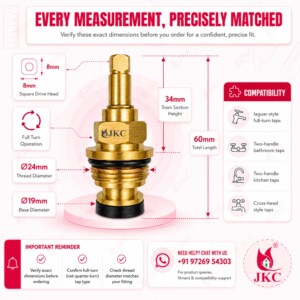
Shop These Parts on JKC Emart:
Signs You Need to Service or Replace Your Spindle Tap
Most homeowners ignore early warning signs until the drip becomes a full leak or the tap becomes impossible to close. Recognising these symptoms early saves water, prevents water damage to walls and floors, and keeps repair costs low.
Visible and Operational Warning Signs
- Constant dripping from the spout even after fully closing the tap — the most common sign of a worn rubber washer on the spindle tip.
- Water leaking around the tap handle or bonnet nut — indicates a damaged or compressed O-ring on the spindle body.
- Stiff or hard-to-turn handle — caused by mineral scale buildup on the spindle threads or a corroded spindle body.
- Handle spinning freely without stopping the water flow — the spindle thread has stripped and needs immediate replacement.
- Squeaking sound when turning the tap — early sign of spindle thread wear or dry rubber components.
- Visible rust or discoloration around the bonnet area — suggests the spindle material has begun corroding internally.
In hard water areas like Rajasthan, parts of Gujarat, and Delhi NCR, spindle wear happens faster because mineral deposits accelerate rubber degradation and cause thread seizing. A spindle that might last 5–7 years in a soft water region may need replacement in as little as 2–3 years in these zones.
Plumber’s Insight: If your tap is dripping and the handle has started to feel “spongy” when you tighten it, the rubber washer at the base of the spindle has completely deteriorated. Do not keep tightening — you will strip the spindle thread. Replace the spindle assembly immediately.
A single dripping tap can waste up to 15–20 litres of water per day, which adds up to 450–600 litres monthly. In cities with water scarcity like Chennai or Hyderabad, this is both an environmental and a financial concern. Timely spindle tap servicing is genuinely worth the effort.
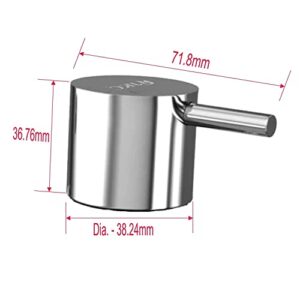
Browse Compatible Parts:
Brand Compatibility Guide: Which Spindle Fits Your Tap?
One of the most common mistakes Indian homeowners make when ordering spindle tap parts online is buying the wrong size or an incompatible part. Spindle dimensions, thread pitch, and tip diameter vary between brands — and sometimes even between product lines within the same brand.
You can browse brand-specific compatible tap spindles at JKC Emart to find the exact match for your fitting. Below is a compatibility overview for the most common brands found in Indian homes in 2026.
| Brand | Spindle Type | Thread Standard | Common Tap Series | Notes |
|---|---|---|---|---|
| Jaquar | Brass spindle / Ceramic disc | M20 x 1.5 / M24 x 1.5 | Allied, Kubix, Florentine | Requires Jaquar-specific cartridge for single-lever models |
| Cera | Brass spindle | M20 x 1.5 | Lyric, Aria, Fusion | Standard 1/2″ BSP compatible in most pillar taps |
| Parryware | Brass spindle + rubber washer | M18 x 1.5 / M20 x 1.5 | Coral, Jade, Primo | Older models use M18 — always check bonnet size |
| Hindware | Brass spindle | M20 x 1.5 | Contessa, Classique | Widely compatible with standard Indian market spindles |
| ESS ESS / Marc | Plastic/Brass spindle | M18 x 1.5 | Fusion, Euro series | Budget range — plastic spindles common, replace with brass upgrade |
| Essco / ARK / LMC | Standard brass spindle | M20 x 1.5 | Economy pillar taps | Most interchangeable with generic Indian market spindles |
| Kohler / Grohe / Roca | Ceramic cartridge | Brand-specific | Luxury range | Requires OEM or exact-compatible cartridge — do not substitute |
- Always note the bonnet nut size (typically 24mm, 26mm, or 32mm) before ordering a replacement spindle.
- For Jaquar and Cera premium ranges, prefer ceramic disc spindle kits — they last significantly longer than rubber washer types.
- If your tap is more than 10 years old, consider upgrading to a full brass spindle kit even if the original was plastic — the cost difference is minimal.
- For imported brands like Grohe and Geberit, always verify the cartridge model number from the tap’s documentation before ordering.
Step-by-Step DIY Spindle Tap Service Guide
Servicing a spindle tap at home is a straightforward task that most homeowners in urban India can complete in 20–40 minutes with basic tools. This guide covers the full process from water shut-off to testing — no plumber needed.
Tools You Will Need
- Adjustable spanner or open-ended spanner (24mm–32mm)
- Flathead and Phillips screwdriver (for handle screw removal)
- Replacement spindle assembly (correct brand and thread size)
- PTFE tape (Teflon tape) for thread sealing
- Plumber’s grease or petroleum jelly
- Clean cloth or rag
- Small bucket or tray (to catch residual water)
- Needle-nose pliers (optional, for O-ring removal)
Phase 1: Shut Off Water and Disassemble the Tap
Begin by shutting off the water supply at the isolation valve below the basin or at the main stopcock for the bathroom. Open the tap fully to drain any residual water pressure from the line. Place a bucket or folded cloth under the tap to catch drips.
- Remove the tap handle — prise off the decorative cap on top, unscrew the handle screw with a Phillips screwdriver, and lift the handle off the spindle stem.
- Locate the bonnet nut (the hexagonal nut just below the handle body) and use your adjustable spanner to turn it counter-clockwise to loosen it.
- Once the bonnet nut is removed, the entire spindle assembly will pull out of the tap body — it may need a slight twist to release if mineral scale has built up.
- Inspect the spindle carefully — look for worn rubber washer at the base, cracked O-rings along the body, and corrosion or stripped threads on the spindle shaft.
Pro Tip: Before removing the bonnet nut, wrap the jaws of your spanner with masking tape to avoid scratching the chrome finish on premium Jaquar or Cera tap bodies. A scratch on the bonnet area can lead to corrosion over time.
Phase 2: Inspect, Clean, or Replace the Spindle
With the spindle removed, you now have three options: clean and re-grease (for stiff taps with no visible damage), replace only the rubber washer and O-rings (for minor leaks), or replace the entire spindle assembly (for stripped threads or heavy corrosion).
- Clean the spindle threads with an old toothbrush and white vinegar to remove mineral scale. Rinse thoroughly and dry.
- Remove the old rubber washer from the spindle tip — it is held by a small brass screw. Replace with the new washer from your kit, ensuring it sits flat and flush.
- Slide off the old O-rings from the spindle body grooves using needle-nose pliers. Lightly coat the new O-rings with plumber’s grease before fitting them into the grooves.
- If you are fitting a completely new spindle, wrap 2–3 layers of PTFE tape around the spindle thread before insertion to ensure a watertight seal.
- Apply a thin film of plumber’s grease to the spindle body and threads to ensure smooth operation after reassembly.
Phase 3: Reassemble and Test
Insert the serviced or new spindle back into the tap body by hand, turning clockwise until it seats fully. Thread the bonnet nut back on by hand first, then tighten with the spanner — do not overtighten, as this can crack plastic tap bodies or strip brass threads.
- Refit the tap handle and tighten the handle screw. Replace the decorative cap.
- Slowly restore the water supply at the isolation valve — do not open it fully all at once.
- Turn the tap on and off several times to check for smooth operation and confirm there is no dripping from the spout or leaking around the bonnet area.
- If a minor drip persists at the bonnet, give the nut a quarter-turn tighter with the spanner — this usually resolves residual leaks.
Pro Tip: After reassembly, leave the tap open for 30 seconds to flush out any debris that may have entered the tap body during servicing. This prevents grit from damaging the new rubber washer on first use.
Common Mistakes Homeowners Make When Servicing Spindle Taps
Even experienced DIY homeowners make errors during spindle tap servicing that lead to recurring leaks, damaged fittings, or wasted money on wrong parts. Here are the four most common mistakes observed across Indian households in 2026 — and how to avoid them.
Mistake 1: Replacing Only the Rubber Washer and Ignoring the O-Rings
The rubber washer at the spindle tip stops spout dripping, but the O-rings on the spindle body prevent leaking around the handle. Many homeowners replace just the washer, only to find water seeping from the bonnet area within weeks. Always replace both the washer and O-rings as a complete set — kits cost only ₹30–₹80 more than individual washers.
Mistake 2: Buying the Wrong Spindle Size
Indian taps use several different spindle thread standards — M18 x 1.5, M20 x 1.5, and M24 x 1.5 being the most common. Buying a spindle that looks similar but has a different thread pitch will either not fit at all or will cross-thread and permanently damage the tap body. Always measure the bonnet nut diameter and the spindle length before ordering. When in doubt, take the old spindle to the shop or send a photo to JKC Emart’s customer support at cu**********@******rt.in.
Mistake 3: Overtightening the Bonnet Nut
After fitting the new spindle, many people overtighten the bonnet nut thinking a tighter fit means a better seal. This is incorrect — overtightening compresses the O-rings excessively, causing them to split and actually worsening the leak. It can also crack the tap body on older or plastic-body taps. Tighten firmly by hand, then add no more than a quarter-turn with the spanner.
Mistake 4: Not Using PTFE Tape on Spindle Threads
Skipping PTFE (Teflon) tape on the spindle thread is one of the most common causes of post-service leaks. PTFE tape fills micro-gaps in the thread and creates a watertight seal that the metal thread alone cannot achieve. Two to three wraps of PTFE tape in the direction of the thread (clockwise) is sufficient — more than five wraps can make the spindle difficult to fully seat.
Hard Water and Indian Climate Considerations for Spindle Tap Longevity
India’s diverse geography means that water hardness levels vary dramatically from city to city. Homeowners in Delhi NCR, Rajasthan, Gujarat, and parts of Maharashtra deal with some of the hardest municipal water in the country — with TDS (Total Dissolved Solids) levels often exceeding 500 mg/L. This has a direct and significant impact on spindle tap lifespan.
How Hard Water Damages Spindle Taps Faster
- Limescale buildup on spindle threads causes the spindle to seize inside the tap body — making it difficult or impossible to remove without damaging the tap.
- Mineral deposits on rubber washers cause them to harden and crack within 12–18 months instead of the typical 3–5 years in soft water areas.
- Calcium and magnesium deposits on O-rings cause them to lose elasticity, leading to leaks around the bonnet nut.
- Corrosion of brass spindle bodies is accelerated in high-chlorine municipal water, especially in coastal cities like Mumbai and Chennai.
Practical Maintenance Tips for Hard Water Areas
If you live in a hard water zone, a few preventive measures can extend your spindle tap’s service life significantly. Regular maintenance is far cheaper than repeated part replacements.
- Soak the removed spindle in a white vinegar solution for 30–60 minutes before reassembly to dissolve mineral scale — do this every 12–18 months as preventive maintenance.
- Use EPDM rubber washers and O-rings rather than standard NBR rubber — EPDM is more resistant to chlorine and mineral-rich water.
- Apply silicone-based plumber’s grease (not petroleum jelly) to O-rings in hard water areas — petroleum jelly can degrade EPDM rubber over time.
- Consider installing a whole-home water softener or inline filter if your TDS exceeds 400 mg/L — this protects all plumbing fixtures, not just tap spindles.
- In coastal cities, choose DZR (dezincification-resistant) brass spindles — they resist corrosion from chlorinated seawater-influenced supply lines far better than standard brass.
Expert Note: In Vadodara, Surat, and Ahmedabad — where water hardness is consistently high — JKC Emart recommends opting for brass spindle kits with EPDM O-rings rather than standard rubber kits. The price difference is ₹40–₹80 per spindle, but the service life difference can be 2–3 additional years.
How to Buy the Right Spindle Tap Part Online in 2026
Ordering plumbing spare parts online in India has become significantly easier in 2026, with specialist stores like JKC Emart offering brand-specific compatibility, detailed product descriptions, and expert support. However, buying the wrong part remains the number one complaint among DIY homeowners. Here are six practical tips to order confidently.
- Identify your tap brand and series first. Check the tap body for a brand logo or embossed model name. Common locations are the base of the spout, the handle, or the back of the tap body. For Jaquar and Cera, the series name (e.g., Kubix, Allied) is usually printed on the product documentation or the original packaging.
- Measure the bonnet nut diameter. Use a vernier caliper or a standard ruler to measure the hexagonal bonnet nut across its flats. This measurement (typically 24mm, 26mm, or 32mm) directly indicates the spindle size you need.
- Measure the spindle length. Once removed, measure the full length of the old spindle from tip to top of the threaded section. Most Indian pillar taps use 55mm–75mm spindles — but verify before ordering.
- Photograph the old spindle and O-rings. A clear photo showing the spindle tip, thread, and O-ring grooves allows customer support teams to verify compatibility. JKC Emart’s support team at +91 97269 54303 or cu**********@******rt.in can confirm compatibility from a photo within minutes.
- Order a complete kit, not just the washer. A complete spindle kit including the spindle body, rubber washer, and O-ring set costs only marginally more than individual components but ensures all wear parts are replaced simultaneously — preventing a second service call within months.
- Check for free shipping eligibility. JKC Emart offers free pan-India shipping on orders above ₹499. If you need spindles for multiple taps, consolidate your order to cross this threshold and save on delivery charges.
You can order the correct tap spindle directly on JKC Emart with full brand compatibility details listed on every product page. The store also has a presence on Amazon India for homeowners who prefer the Amazon checkout experience.
Smart Buying Tip: If you are unsure between two spindle sizes, order both — the price difference is typically ₹50–₹150. Return the unused one under JKC Emart’s 7-day easy return policy. This is far cheaper than making a second plumber visit because you ordered the wrong size.
Ready to Order? Here Are the Top Picks:
Frequently Asked Questions About Spindle Tap Service in India
Q1: How often should I service my spindle tap in India?
For soft water areas (Bangalore, parts of Kerala, Northeast India), a spindle tap typically needs servicing every 4–6 years under normal use. In hard water cities like Delhi, Jaipur, or Vadodara, plan for servicing every 2–3 years as mineral deposits accelerate rubber washer and O-ring wear. If you notice any dripping, stiffness, or leaking around the handle, service it immediately regardless of how long it has been since the last service — waiting causes additional damage to the tap seat and body.
Q2: Can I service a spindle tap myself, or do I need a plumber?
In the vast majority of cases, spindle tap servicing is a straightforward DIY task that any homeowner can complete with basic tools in 20–40 minutes. You do not need special plumbing skills — just the correct replacement spindle kit, a spanner, a screwdriver, and PTFE tape. The only situations where you genuinely need a plumber are: if the tap body is cracked, if the spindle thread inside the tap body is damaged (requiring a tap reseating tool), or if the tap is part of a concealed fitting embedded in a wall. For all standard pillar taps, basin mixers, and bib taps, DIY servicing is entirely achievable.
Q3: How do I know if I need to replace the entire tap or just the spindle?
Replace only the spindle (and washer/O-rings) if: the tap body is intact, the internal tap seat is smooth (run your finger over it — it should feel flat and even), and the dripping or leaking started recently. Replace the entire tap if: the tap body is visibly cracked or corroded, the internal tap seat is pitted or damaged (causing the washer to not seal even when new), or the spindle thread inside the tap body has stripped. In most cases — especially for taps less than 15 years old — spindle replacement is sufficient and costs a fraction of a full tap replacement.
Q4: What is the difference between a spindle tap and a ceramic disc tap?
A traditional spindle tap uses a rubber washer on a threaded brass spindle that presses down onto a metal seat to stop water flow — it requires multiple turns of the handle to open and close. A ceramic disc tap uses two precision-ground ceramic discs that rotate against each other to control flow, requiring only a quarter-turn of the handle. Ceramic disc taps are more durable and drip-resistant but more expensive to repair when they fail. Most Indian homes built before 2015 use traditional spindle taps — homes with modern single-lever mixers typically have ceramic cartridges. Both types are serviceable, but the replacement parts and process differ significantly.
Q5: Why is my tap still dripping after I replaced the spindle and washer?
If the tap continues to drip after a fresh spindle and washer installation, the most likely cause is a damaged tap seat — the metal surface inside the tap body that the rubber washer presses against to create a seal. If the seat is pitted, grooved, or corroded, even a perfect new washer cannot create a watertight seal. The solution is to use a tap reseating tool (available at hardware stores for ₹150–₹400) to grind the seat smooth, or to replace the entire tap. A less common cause is an incorrectly sized washer — if the washer is slightly too small for the tap seat diameter, it will not seal fully. Always verify washer diameter against your specific tap model.
Conclusion: Fix Your Dripping Tap Today with the Right Parts
A dripping spindle tap is not a reason to call an expensive plumber or replace an entire fitting. With the right replacement spindle kit, basic tools, and the step-by-step process outlined in this guide, most Indian homeowners can resolve the issue in under an hour — saving ₹300–₹600 in service charges and protecting their home from water damage. Whether your tap is a Jaquar pillar tap in a Mumbai apartment or a Parryware bib tap in a Jaipur bungalow, the servicing process is fundamentally the same.
JKC Emart stocks genuine compatible spindle kits for all major Indian sanitaryware brands — Jaquar, Cera, Parryware, Hindware, ESS ESS, Marc, Essco, ARK, Kohler, and more. Every part is quality-verified, and the team offers expert support via phone and email to help you identify the exact part you need before you order. With free pan-India shipping on orders above ₹499, a 7-day easy return policy, and availability on Amazon India, there is no reason to settle for a local hardware shop’s guesswork or an overpriced plumber’s markup.
Stop wasting water and money on a dripping tap. Order your spindle kit today and get it done this weekend.

About author






Add comment
You must be logged in to post a comment.