
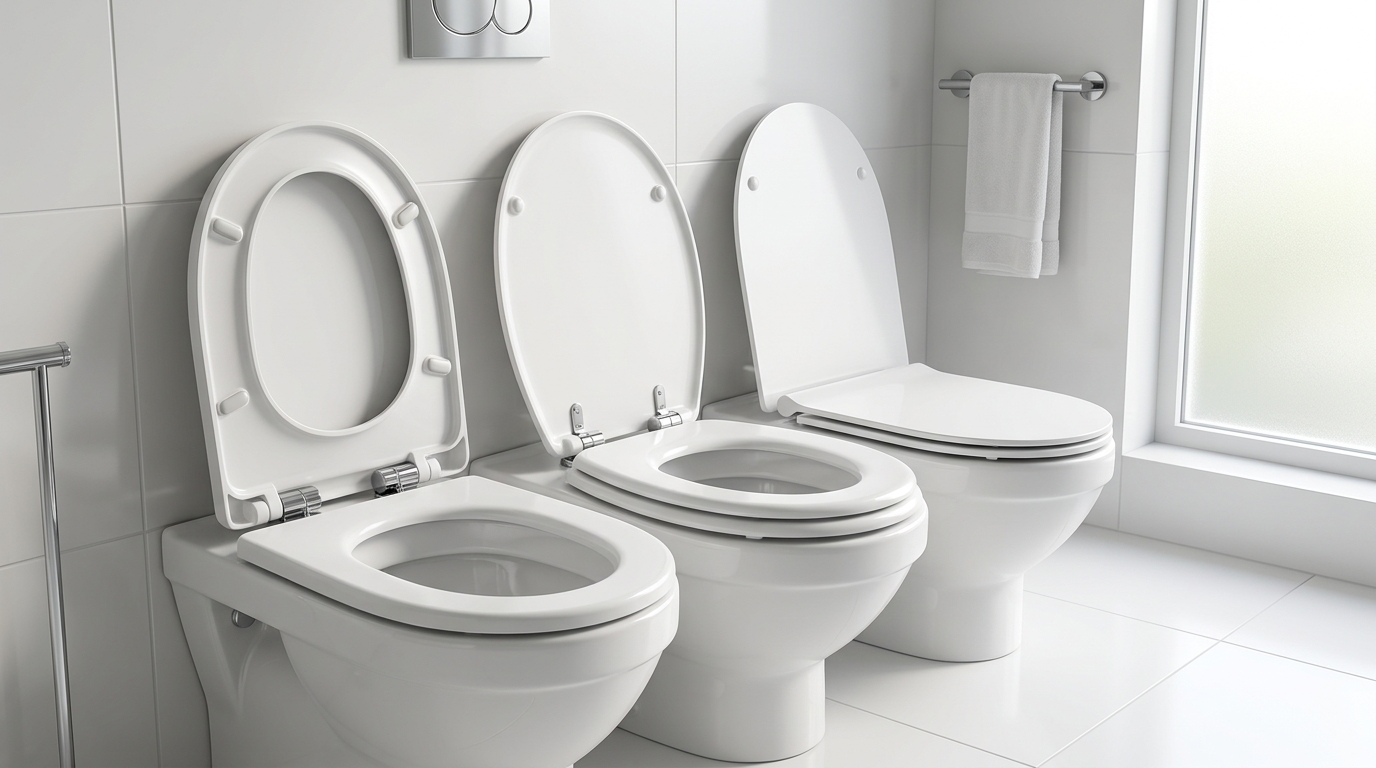
Are All Toilet Seat Covers the Same? Buying Guide 2026
Are All Toilet Seat Covers the Same? Buying Guide 2026
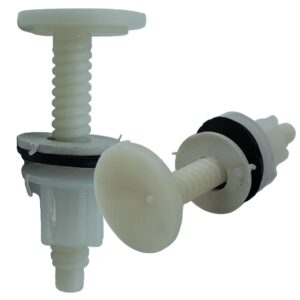
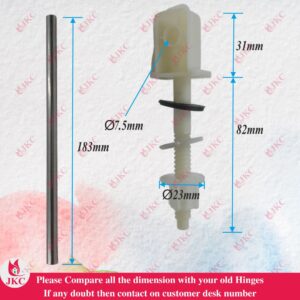
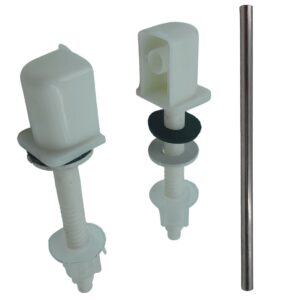
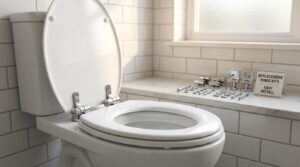
If you’ve ever walked into a hardware shop in Borivali or Rajajinagar and asked for a “replacement toilet seat cover,” you’ve likely been handed something that doesn’t quite fit — wrong hinge spacing, wrong shape, wrong fixing bolt distance. Toilet seat cover sizes and compatibility India is a genuinely complex topic that trips up thousands of homeowners every year. The seat cover that fits your neighbour’s Cera EWC might not fit your Parryware or Jaquar toilet at all. Before you buy anything, understanding the differences in shape, size, hinge type, and brand compatibility can save you a wasted trip, a plumber’s call, and a seat that wobbles for years. You can browse compatible toilet seat cover hinges and accessories to find the right match for your specific sanitaryware brand.
2026 Toilet Seat Cover Price Guide in India
Toilet seat cover prices in India vary significantly based on material quality, brand, hinge mechanism, and whether the seat includes a soft-close feature. In 2026, raw material cost increases have pushed prices up by roughly 10–15% compared to 2023 levels, especially for polypropylene and duroplast seats with stainless steel hinges. Understanding the price tiers helps you choose wisely without overspending or buying something that breaks in six months.
The table below covers the three main market tiers available across Indian cities — from unbranded local options sold in hardware shops to premium imported seats from global brands.
| Tier | Brand Examples | Material | Seat Cover Price (INR) | Hinge / Replacement Hinge | Estimated Installation Cost | Total Estimated Cost |
|---|---|---|---|---|---|---|
| Generic / Local | Unbranded, local hardware brands | Basic PP plastic | ₹250 – ₹600 | ₹80 – ₹150 | ₹100 – ₹200 (DIY possible) | ₹430 – ₹950 |
| Standard / Mid-Range | Essco, ARK, Aquel, LnK, LMC, Goldline | Polypropylene (PP) | ₹700 – ₹1,800 | ₹150 – ₹350 | ₹200 – ₹400 | ₹1,050 – ₹2,550 |
| Premium / Brand | Jaquar, Cera, Parryware, Hindware, Kohler, Grohe, Roca, Duravit | Duroplast / UF / Soft-close PP | ₹1,800 – ₹6,500+ | ₹350 – ₹900 | ₹300 – ₹600 | ₹2,450 – ₹8,000+ |
Key cost insight: In most Indian cities, replacing just the hinge mechanism on an existing toilet seat costs between ₹150 and ₹500 — far cheaper than replacing the entire seat. If your seat is in good condition but the hinge has cracked or snapped, always replace the hinge first.
Plumber’s Tip: In cities with hard water like Ahmedabad, Jaipur, and Nagpur, plastic hinges tend to corrode and crack faster. Invest in stainless steel or brass-core hinges for longevity — they typically last 3–5 years longer than standard plastic hinges.
Shop These Parts on JKC Emart:
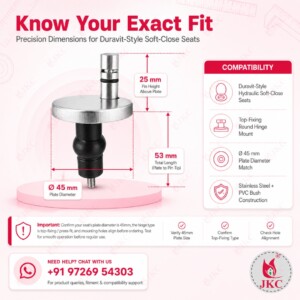
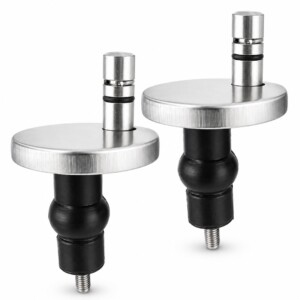
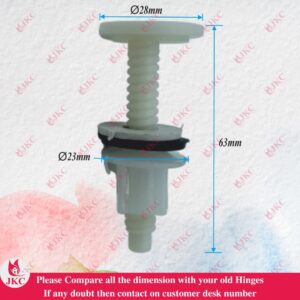
Understanding Toilet Seat Cover Shapes and Sizes
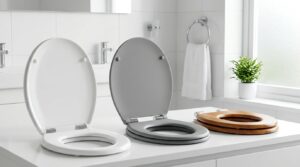
No, all toilet seat covers are absolutely not the same — and shape is the very first variable to get right. Indian sanitaryware manufacturers produce WC pans in at least three distinct shapes, and a seat designed for one shape will not fit another, even if the brand is the same. Getting the shape wrong is the single most common reason for returns and ill-fitting replacements.
Round vs Elongated: Which Is More Common in India?
The majority of Indian residential toilets — particularly in older housing societies built before 2010 — use a round or D-shaped WC pan. These are compact, suited to smaller Indian bathrooms, and account for roughly 60–65% of the installed base. Elongated (or oval) pans are increasingly common in premium apartments, hotels, and new township projects in cities like Pune, Gurugram, and Bengaluru.
- Round / D-Shape: Shorter front-to-back length, typically 40–43 cm. Common in Parryware, Hindware, and older Cera models.
- Elongated / Oval: Longer front-to-back length, typically 44–48 cm. Common in Jaquar, Kohler, Roca, and Duravit.
- Square / Designer Shape: Modern, flat-front design. Seen in high-end Grohe, Geberit, and premium Jaquar collections.
- P-Trap vs S-Trap pans: While this affects the toilet base, not the seat shape, it’s worth noting when ordering a full replacement set.
Standard Measurements to Know Before Buying
Before ordering any toilet seat cover online, you need three specific measurements from your existing WC pan. These measurements determine compatibility more accurately than brand name alone. Even within a single brand like Cera, different product lines have different pan dimensions.
- Overall length (front to back): Measure from the rear edge of the pan to the front tip. This is the most critical measurement.
- Overall width: Measure the widest point of the pan, typically near the front.
- Hinge hole distance (bolt spread): Measure the centre-to-centre distance between the two hinge mounting holes at the rear of the pan. This is typically 140 mm, 155 mm, or 180 mm in Indian toilets.
- Hinge hole to rear edge: Measure how far the hinge holes sit from the very back of the pan.
Pro Tip: Always note down all four measurements before going online or to a hardware store. A difference of even 10 mm in hinge bolt spread means the seat won’t sit flat — it will rock or overhang.
Brand Compatibility Guide for Indian Sanitaryware
Brand compatibility is where most Indian homeowners get confused. It’s tempting to assume that a “Jaquar toilet seat” will fit any Jaquar WC — but Jaquar alone has over 15 different WC pan series, each with slightly different dimensions and hinge specifications. The same applies to Cera, Parryware, and Hindware. You can view all brand-compatible toilet seat cover hinges at JKC Emart to find options sorted by brand and model type.
Jaquar and Cera Toilet Seat Compatibility
Jaquar is one of India’s most widely installed premium sanitaryware brands, and their WC pans predominantly use elongated or D-shaped seats with a 155 mm or 180 mm hinge bolt spread. Their soft-close seats use proprietary hinge mechanisms in many product lines, so it’s important to identify the exact series (e.g., Jaquar Lyric, Fonte, or Kubix) before ordering a replacement seat or hinge.
Cera toilets are extremely common in middle-class housing across Gujarat, Rajasthan, and Maharashtra. Cera uses both round and elongated pans depending on the series — their older Melody and Aria series use round D-shaped seats, while newer Cosmo and Zen series use elongated forms. Cera hinge bolt spreads are typically 140 mm or 155 mm.
- Jaquar: Elongated/D-shape, 155–180 mm bolt spread, soft-close options available
- Cera: Round and elongated, 140–155 mm bolt spread, standard and slow-close hinges
- Kohler: Elongated, 180 mm bolt spread, proprietary hinge systems
- Roca / Duravit / Grohe: European dimensions, often require brand-specific seats
Parryware and Hindware Compatibility
Parryware, one of India’s oldest sanitaryware brands, predominantly uses round D-shaped pans in their mid-range residential series like Ivy, Cascade, and Aria. Their hinge bolt spread is most commonly 140 mm, and they use standard plastic or chrome-plated hinges. Parryware seats are among the most widely available as aftermarket replacements in Indian cities.
Hindware uses both round and elongated pans across their range. Their popular Sparx and Moonbow series use elongated seats with a 155 mm bolt spread, while their compact series for smaller bathrooms use the standard 140 mm round configuration. ESS ESS, Marc, Johnson Tiles, and Jal also use standard Indian dimensions and are generally compatible with aftermarket seats in the 140–155 mm bolt spread range.
- Parryware: Mostly round, 140 mm bolt spread, widely compatible aftermarket options
- Hindware: Round and elongated, 140–155 mm bolt spread
- ESS ESS / Marc / Jal: Standard Indian dimensions, 140–155 mm, good aftermarket availability
- Essco / ARK / Aquel / Aris / Nelson / LnK / LMC / Goldline / Cavier: Standard dimensions, budget-friendly replacement options widely available
Browse Compatible Parts:
Hinge Types and Fixing Mechanisms Explained
The hinge is the most failure-prone component of any toilet seat cover. In Indian bathrooms — where daily cleaning with strong chemical cleaners is common — plastic hinges can crack or seize within 2–4 years. Understanding hinge types helps you choose a replacement that lasts and fits correctly.
Top Fix vs Bottom Fix Hinges
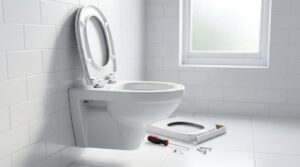
Top-fix hinges are the most common type in Indian residential toilets. The bolt passes through the hinge from the top of the seat, through the pan’s hinge holes, and is tightened with a nut underneath. These are easy to replace without removing the toilet and are found on most Parryware, Cera, Hindware, and mid-range Jaquar models.
Bottom-fix hinges are accessed from underneath the pan rim. They require slightly more effort to install but provide a cleaner look with no visible bolts on the seat surface. These are more common on premium Jaquar, Kohler, Roca, and European brand toilets installed in luxury apartments.
- Standard plastic hinges: Most affordable, available everywhere, lifespan 2–4 years in Indian conditions
- Stainless steel hinges: Rust-resistant, ideal for humid coastal cities like Mumbai, Chennai, Kochi
- Soft-close / slow-close hinges: Damped mechanism prevents slamming, longer lifespan, ₹300–₹900 for the hinge alone
- Quick-release hinges: Allow the seat to be removed easily for deep cleaning — increasingly popular in urban apartments
- Adjustable hinges: Allow minor positional adjustments — useful when the seat doesn’t sit centred on the pan
Plumber’s Insight: If your toilet seat keeps sliding sideways or rocking front-to-back, the problem is almost always the hinge — not the seat itself. Replacing just the hinge (₹150–₹500) fixes the issue without needing a full seat replacement.
Common Mistakes Homeowners Make When Replacing Toilet Seat Covers
Replacing a toilet seat cover seems straightforward — until the new seat doesn’t fit, wobbles, or the hinges snap within a month. These are the four most common mistakes Indian homeowners make when buying a replacement seat, and how to avoid each one.
- Buying by brand name alone without checking dimensions: Just because the box says “Jaquar compatible” or “fits Parryware” doesn’t guarantee a fit. Within each brand, multiple pan series exist with different dimensions. Always measure your existing pan’s length, width, and hinge bolt spread before ordering.
- Ignoring the hinge bolt spread distance: This is the most critical measurement most people skip. A seat with a 155 mm bolt spread will not sit correctly on a pan with 140 mm hinge holes. The seat will either overhang the back of the pan or leave a visible gap.
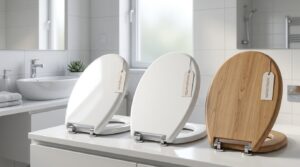
- Choosing the wrong material for Indian bathroom conditions: Basic polypropylene seats are fine in dry climates, but in humid coastal cities or bathrooms that are mopped daily with phenyl or bleach, duroplast or UF (urea formaldehyde) seats hold up significantly better. Many homeowners buy the cheapest option and end up replacing it every 18 months.
- Replacing the entire seat when only the hinge is broken: This is perhaps the most expensive mistake. If the seat body is intact but the hinge has cracked or the bolt has corroded, a ₹150–₹400 hinge replacement is all you need. Buying a full seat (₹700–₹2,500) unnecessarily wastes money.
Pro Tip: Take a photo of the underside of your existing toilet pan showing the hinge holes and their spacing. Share this image with the supplier (or JKC Emart’s customer support at +91 97269 54303) to confirm compatibility before placing an order.
How to Identify the Right Toilet Seat Cover for Your WC
Identifying the correct toilet seat cover requires a systematic approach — not guesswork. The process takes about five minutes and can save you multiple return trips to the hardware shop or failed online deliveries. Here’s a reliable step-by-step identification method used by experienced plumbers across India.
- Step 1 — Find the brand and model: Look for a stamp or label on the underside of the WC pan rim. Most Indian brands (Cera, Parryware, Hindware, Jaquar) print the model name or series number here. Common locations include the inside of the pan, the underside of the rim, or the back of the cistern.
- Step 2 — Identify the pan shape: Stand above the toilet and look straight down. Is the front edge curved (round/D-shape) or more elongated and pointed (elongated/oval)? This is your shape category.
- Step 3 — Measure the pan length: Use a tape measure. Measure from the very back of the pan (where the cistern meets the pan) to the front tip of the bowl opening. Note this in centimetres.
- Step 4 — Measure the pan width: Measure at the widest point, usually about one-third from the front.
- Step 5 — Measure the hinge bolt spread: Open the existing seat and measure the distance between the centre of the left hinge hole and the centre of the right hinge hole. This is your bolt spread — typically 140 mm, 155 mm, or 180 mm.
- Step 6 — Note the hinge type: Is it top-fix (bolt visible on top) or bottom-fix? Is it a standard hinge or soft-close?
Once you have all six data points, you can confidently search for a compatible seat online or share these details with a supplier for an exact match. This process eliminates the guesswork that causes most incompatibility issues.
Quick Identification Hack: If your toilet was installed as part of a builder-grade fit-out in a residential project (which is very common in DDA flats, MHADA colonies, or RERA township projects), there’s a high chance it’s a standard Parryware or Hindware round pan with a 140 mm bolt spread — the most common specification in Indian mass-housing.
How to Measure and Order the Correct Toilet Seat Online
Ordering a toilet seat cover online in India is now entirely practical — provided you follow a structured approach. The growing availability of genuine spare parts through platforms like JKC Emart (also available on Amazon India) means you can get the right part delivered to your door in Lucknow, Surat, or Chennai without visiting a single hardware shop.
How to Buy the Right Toilet Seat Cover Online — 6 Practical Tips
These six tips are specifically designed for Indian homeowners ordering toilet seat covers and hinges online for the first time. Follow them in order and you’ll get the right part on the first attempt.
- Always measure before you search: Don’t start with a brand search. Start with your measurements — pan length, pan width, and hinge bolt spread. These three numbers narrow your options immediately and prevent buying a seat that’s 2 cm too long or has the wrong bolt spread.
- Check the product listing for bolt spread specifications: Reputable sellers will list the hinge bolt spread (e.g., “fits 155 mm hinge spacing”) in the product description. If this information is absent, contact the seller before ordering. JKC Emart’s customer support team at cu**********@******rt.in or +91 97269 54303 can confirm compatibility for your specific model.
- Prefer sellers who list brand compatibility explicitly: A product listing that says “compatible with Jaquar Lyric series, Cera Cosmo, and Parryware Ivy” is far more reliable than one that says “universal fit.” Universal-fit seats exist, but they often use adjustable hinges that don’t provide the same stability as a properly fitted seat.
- Choose material based on your bathroom usage: For bathrooms cleaned daily with chemical cleaners, choose duroplast or UF seats. For dry, infrequently used bathrooms (like a guest toilet), standard PP is fine. Soft-close hinges add ₹200–₹500 to the cost but significantly extend the hinge’s lifespan by reducing impact stress.
- Order from sellers with a clear return policy: JKC Emart offers a 7-day easy return policy and free shipping above ₹499, which gives you the safety net to return a part if dimensions don’t match. Always retain the original packaging until you’ve verified the fit.
- Buy the hinge separately if your seat body is intact: If only the hinge is broken, search specifically for a compatible replacement hinge rather than a full seat. This can save you ₹500–₹2,000 depending on your seat’s quality. You can find replacement toilet seat cover hinges sorted by brand and bolt spread at JKC Emart for a quick, affordable fix.
Ready to Order? Here Are the Top Picks:
Frequently Asked Questions About Toilet Seat Cover Sizes and Compatibility in India
Q1. Are toilet seat covers universal or do they need to match the brand?
Toilet seat covers are not universal, despite what some product listings claim. While the bolt spread sizes (140 mm, 155 mm, 180 mm) are somewhat standardised across Indian brands, the pan shape (round vs elongated), overall dimensions, and hinge type all vary significantly between brands and even between product series within the same brand. A seat that fits a Parryware Ivy will likely not fit a Jaquar Fonte without adjustment. Always measure your pan and cross-check specifications before ordering. The safest approach is to buy a seat that explicitly lists compatibility with your specific toilet model or series.
Q2. What is the standard toilet seat size in India?
There is no single universal standard, but the most common toilet seat dimensions in Indian residential housing are approximately 42–44 cm in length and 36–38 cm in width for round/D-shaped pans, and 45–48 cm in length and 37–39 cm in width for elongated pans. The most common hinge bolt spread is 140 mm for budget and mid-range toilets (Parryware, Hindware, older Cera models) and 155 mm for premium Indian brand toilets. European brands like Kohler, Roca, and Duravit often use 180 mm bolt spreads. Always measure your specific toilet rather than relying on these general ranges.
Q3. Can I replace just the toilet seat hinge without replacing the entire seat?
Yes, absolutely — and in most cases, this is the recommended approach. If your toilet seat body is structurally sound (no cracks, no discolouration, no warping), but the hinge has cracked, corroded, or the bolt has seized, a hinge-only replacement is the most cost-effective solution. Replacement hinges for standard Indian toilets cost between ₹150 and ₹500 depending on material and type (standard plastic, stainless steel, or soft-close). The replacement process typically takes 10–15 minutes with a screwdriver and adjustable spanner. JKC Emart stocks hinge replacements compatible with Jaquar, Cera, Parryware, Hindware, ESS ESS, and most other Indian brands.
Q4. Why does my new toilet seat keep sliding or rocking even after installation?
A rocking or sliding toilet seat is almost always caused by one of three issues: incorrect bolt spread (the seat’s hinge holes don’t align precisely with the pan’s hinge holes), loose hinge nuts (the fixing nuts underneath the pan have not been tightened properly), or worn rubber bumpers (the small rubber feet on the underside of the seat that prevent movement have deteriorated). Start by checking that the hinge bolt spread of your seat matches your pan exactly. Then tighten the fixing nuts firmly — hand-tight plus a quarter turn with a spanner is usually sufficient. If the rubber bumpers are missing or worn, replacement bumper sets are available for under ₹100 at most hardware shops and online.
Q5. How long should a toilet seat cover last in Indian conditions?
A quality toilet seat cover should last 5–8 years in normal Indian residential use. However, several factors reduce this lifespan significantly. Daily cleaning with strong bleach or acid-based cleaners (common in Indian households) degrades polypropylene seats faster than in markets where milder cleaners are used. Hard water in cities like Jaipur, Ahmedabad, and Delhi causes mineral buildup around hinges, accelerating corrosion and cracking. Soft-close seats with stainless steel hinges and duroplast or UF seat bodies consistently outperform basic PP seats in Indian conditions. Investing ₹1,500–₹3,000 in a mid-to-premium seat upfront is more economical than replacing a ₹400 seat every 18–24 months.
Conclusion: Get the Right Toilet Seat Cover — First Time, Every Time
The short answer to “are all toilet seat covers the same?” is a definitive no. Shape, size, hinge bolt spread, material, and fixing mechanism all vary across Indian sanitaryware brands and product series. But with the right measurements in hand and a clear understanding of your toilet’s specifications, finding the correct replacement seat or hinge is entirely manageable — even without a plumber’s help.
Whether you need a replacement hinge for a Parryware toilet in a Pune housing society, a soft-close seat for a Jaquar WC in a Bengaluru apartment, or a full seat replacement for a Cera model in your Ahmedabad home, JKC Emart stocks genuine compatible parts for all major Indian sanitaryware brands. Every part is verified for quality, and the team can help you confirm compatibility before you order.
JKC Emart offers pan-India free shipping on orders above ₹499, a 7-day easy return policy, and expert customer support at +91 97269 54303 or cu**********@******rt.in. You can also find JKC Emart products on Amazon India for fast Prime delivery. Stop guessing and start measuring — the right part is one order away.
Browse All Spare Parts at JKC Emart
About author


Add comment
You must be logged in to post a comment.