
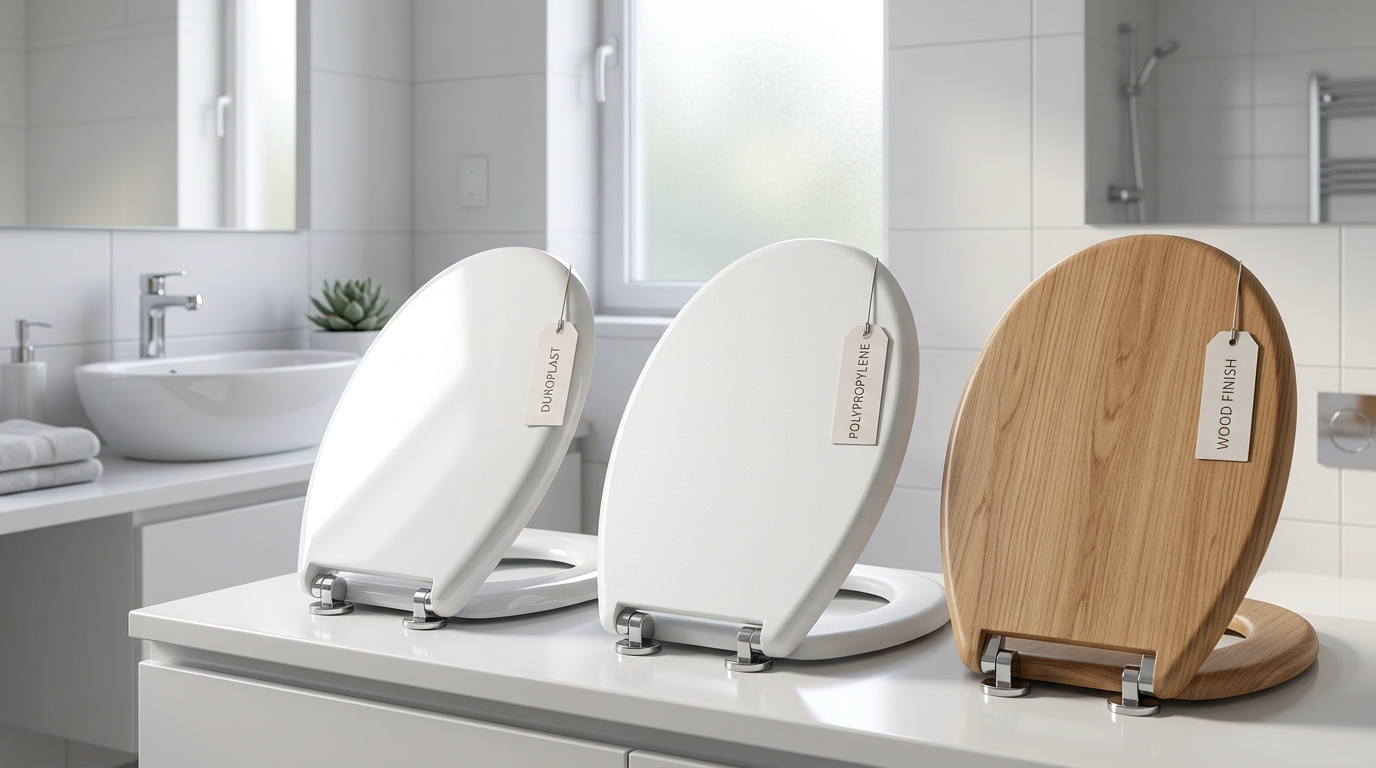
Best Material for Toilet Seat Covers in India 2026 Guide
Best Material for Toilet Seat Covers in India 2026 Guide
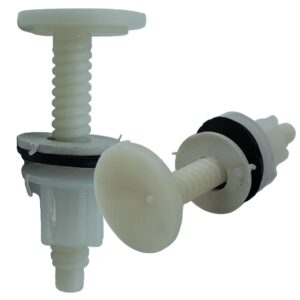
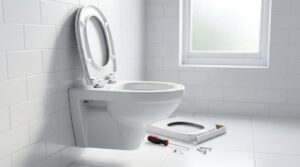
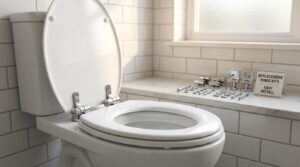
In older housing societies across areas like Borivali West in Mumbai or Rajajinagar in Bangalore, one of the most common bathroom complaints is a cracked, yellowed, or wobbly toilet seat cover — often ignored for months until it becomes genuinely uncomfortable or unhygienic. Choosing the best material for toilet seat covers India homeowners can rely on is not just about looks; it directly affects durability, hygiene, and how well the seat holds up against daily use, humidity, and hard water exposure. If you are replacing just the seat cover or its hinges, you can browse compatible toilet seat cover hinges to get the right fit without replacing the entire toilet unit.
Table of Contents
- 1. Toilet Seat Cover Price Guide in India 2026
- 2. Material Comparison: Which Is Best for Indian Homes?
- 3. Brand Compatibility Guide for Toilet Seat Covers
- 4. Signs You Need to Replace Your Toilet Seat Cover
- 5. Hard Water and Indian Climate Considerations
- 6. Common Mistakes Homeowners Make When Replacing Toilet Seat Covers
- 7. Maintenance and Longevity Tips for Toilet Seat Covers
- 8. How to Buy the Right Toilet Seat Cover Online
- 9. Frequently Asked Questions
- 10. Conclusion
Toilet Seat Cover Price Guide in India 2026
Toilet seat cover prices in India vary significantly based on material, brand, and hinge mechanism quality. Post-2022 raw material inflation has pushed prices up by roughly 10–15% across all tiers. Understanding what you are paying for helps you avoid overspending on features you do not need — or underspending on a seat that cracks within six months.
The table below covers current 2026 market pricing across three tiers, including estimated installation cost if you hire a local plumber for fitting:
| Tier | Material | Brand Examples | Seat Cover Price (INR) | Hinge / Spare Kit | Installation Cost (Approx.) | Total Estimated Cost |
|---|---|---|---|---|---|---|
| Generic / Budget | Basic Polypropylene (PP) | Local unbranded, LMC, Goldline | ₹250 – ₹600 | ₹80 – ₹150 | ₹200 – ₹350 | ₹530 – ₹1,100 |
| Standard | Thick PP / Duroplast | Essco, ARK, Aquel, Aris, LnK | ₹700 – ₹1,500 | ₹150 – ₹300 | ₹300 – ₹500 | ₹1,150 – ₹2,300 |
| Premium | Duroplast / Soft-Close PP | Jaquar, Cera, Parryware, Hindware, Kohler, Roca, Duravit | ₹1,800 – ₹6,000+ | ₹300 – ₹800 | ₹400 – ₹700 | ₹2,500 – ₹7,500+ |
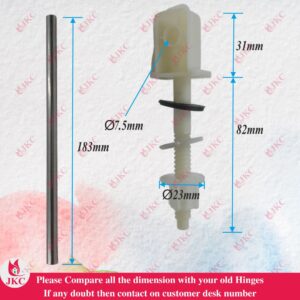
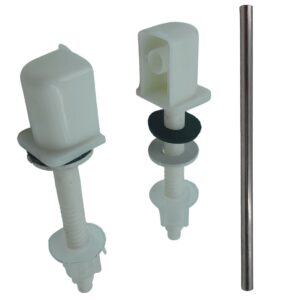
Plumber’s Note: In most standard Indian toilets (EWC / Western Commode), the seat cover hinge is the first component to fail — not the seat itself. Before buying a full replacement seat, check if a compatible hinge kit alone can fix the wobble or loose-fit issue.
Shop These Parts on JKC Emart:
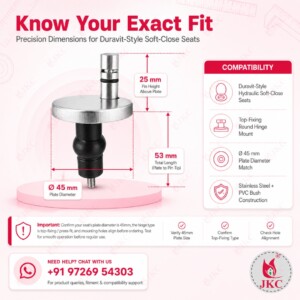
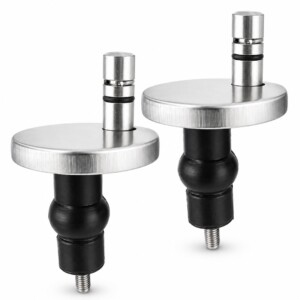
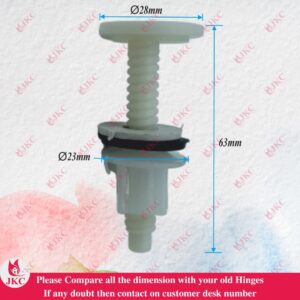
Material Comparison: Which Is Best for Indian Homes?
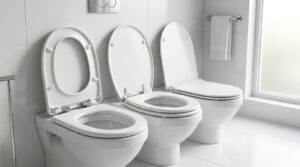
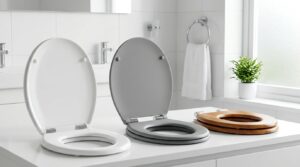
There are four main materials used in toilet seat covers sold in India: Polypropylene (PP), Duroplast (Urea Formaldehyde), MDF / Solid Wood, and occasionally Stainless Steel or Acrylic. Each has specific strengths depending on your bathroom usage, climate zone, and budget. Here is a detailed breakdown:
Polypropylene (PP) Seats
Polypropylene is by far the most widely used material for toilet seat covers across India — from budget housing projects to mid-range apartments. It is lightweight, resistant to basic cleaning chemicals, and available in white, ivory, and beige to match standard Indian sanitaryware. Most local plumbers carry PP replacement seats as a default stocking item.
The main concern with basic PP seats is yellowing over time, especially in bathrooms with high humidity and direct sunlight exposure. Thin PP seats (under 5mm) also tend to crack under heavy body weight or if someone sits unevenly on the edges. Thicker PP seats (8mm+) sold by brands like Essco, Aris, and ARK perform significantly better.
- Best for: Budget apartments, rental properties, frequent replacement scenarios
- Lifespan: 2–5 years depending on quality and usage
- Cleaning ease: High — wipes clean easily
- Weight capacity: Moderate — opt for 8mm+ thickness for heavier users
- Price range: ₹250 – ₹1,200
Duroplast / Urea Formaldehyde Seats
Duroplast (also called Urea Formaldehyde or thermoset plastic) is the premium material of choice for high-end toilet seat covers from brands like Jaquar, Kohler, Roca, Duravit, and Cera. Unlike thermoplastic PP, Duroplast is a thermoset material — meaning it does not soften or deform under heat, does not yellow, and maintains its colour and rigidity for significantly longer. It is heavier and denser than PP, which gives it a noticeably superior feel.
Duroplast seats are scratch-resistant and hold up much better against harsh cleaning agents like bleach and acid-based bathroom cleaners commonly used in Indian households. They are the standard material in soft-close seat mechanisms found in premium bathrooms. The soft-close hinge mechanism is usually integrated into Duroplast seats and prevents the loud slamming that damages both the seat and the toilet rim over time.
- Best for: Owner-occupied premium homes, hotels, clinics, long-term use
- Lifespan: 8–15 years with proper maintenance
- Cleaning ease: Excellent — non-porous surface resists staining
- Yellowing resistance: Very high — does not discolour under UV or chemical exposure
- Price range: ₹1,800 – ₹6,000+
MDF / Solid Wood Seats
MDF (Medium Density Fibreboard) and solid wood toilet seat covers are rarely seen in standard Indian homes but are used in boutique hotels, heritage properties, and premium interior design projects. They offer a warm, natural aesthetic but come with serious practical limitations in India’s humid bathroom environments. Wood absorbs moisture, swells, and can develop mould or delamination within a few years — especially in coastal cities like Chennai, Kochi, or Mumbai.
If you encounter a wood seat in an older bungalow or heritage property, replacing it with a Duroplast seat of matching dimensions is almost always the smarter long-term decision. MDF seats with laminated surfaces perform slightly better than raw wood but still fall short of PP or Duroplast in humid conditions.
- Best for: Dry climate zones, boutique interiors, heritage properties
- Lifespan: 3–7 years (highly climate-dependent)
- Humidity resistance: Poor — not recommended for most Indian bathrooms
- Price range: ₹1,500 – ₹4,000
Stainless Steel and Other Materials
Stainless steel toilet seat covers are used almost exclusively in commercial, industrial, or high-traffic public toilet installations — railway stations, airports, hospitals, and government buildings. They are virtually indestructible, easy to sanitize, and resistant to vandalism. However, they are cold to the touch, noisy, and entirely unsuitable for residential bathrooms.
Acrylic seats are occasionally found in older Indian bathrooms from the 1990s and early 2000s — they are now largely obsolete and replacement parts are difficult to source. If you have an acrylic seat, the best approach is to measure the toilet bowl dimensions and replace it with a compatible PP or Duroplast seat.
- Stainless Steel: Commercial/institutional use only — not for homes
- Acrylic: Largely discontinued — replace with PP or Duroplast equivalent
- Resin / Decorative: Novelty option — poor durability, not practical
Brand Compatibility Guide for Toilet Seat Covers
One of the most common mistakes Indian homeowners make when ordering a replacement toilet seat cover online is assuming all seats are universal. They are not. Toilet bowl shapes, hinge hole spacing, and rim dimensions vary significantly between brands and even between product lines within the same brand. Getting the right fit is critical — a mismatched seat will rock, leave gaps, or simply not attach properly.
You can view all compatible toilet seat cover hinges by brand on JKC Emart to find the exact hinge kit or seat fitting that matches your existing toilet. Here is a quick reference guide for major Indian brands:
| Brand | Common Seat Material | Hinge Type | Bowl Shape | Notes |
|---|---|---|---|---|
| Jaquar | Duroplast / Thick PP | Quick-release soft-close | Elongated / D-shape | Hinge hole spacing: 155mm standard |
| Cera | PP / Duroplast | Standard / Soft-close | Round / Elongated | Measure hinge distance before ordering |
| Parryware | PP | Standard plastic hinge | Round (most models) | Older models use 140mm hinge spacing |
| Hindware | PP / Duroplast | Standard / Soft-close | Elongated / D-shape | Compatible with most universal hinges |
| Kohler | Duroplast | Proprietary quick-release | Elongated | Use brand-specific replacement parts |
| Roca / Duravit | Duroplast | Soft-close, quick-release | Elongated / Square | European dimensions — verify before ordering |
| Essco / ARK / Aquel | PP | Standard plastic hinge | Round / Elongated | Good value mid-range option |
Pro Tip: If you cannot find your toilet brand’s model number on the underside of the tank or seat, measure the distance between the two hinge holes (in mm) and the length and width of the bowl opening. These three measurements are enough to identify a compatible replacement seat or hinge kit.
Browse Compatible Parts:
Signs You Need to Replace Your Toilet Seat Cover
Many Indian homeowners delay replacing a damaged toilet seat cover far longer than they should — often because the damage seems minor or cosmetic at first. But a compromised seat cover is a hygiene risk and can also damage the toilet rim over time. Here are the clearest signs it is time for a replacement:
- Cracks or chips: Even hairline cracks in PP seats harbour bacteria and are impossible to fully sanitize — replace immediately.
- Persistent wobble: If the seat rocks side to side despite tightening the hinge bolts, the hinge anchor points are worn out.
- Yellowing or staining: Deep yellowing that does not clean off is a sign of UV degradation or chemical breakdown in the material.
- Broken or seized hinges: A hinge that no longer holds the seat in the upright position is a safety hazard — the seat can fall unexpectedly.
- Foul odour: Persistent bathroom odour despite cleaning often originates from micro-cracks in the seat absorbing waste.
- Soft-close mechanism failure: If your premium seat no longer closes slowly and silently, the damper inside the hinge has failed — a hinge kit replacement is usually sufficient.
In most cases where only the hinge is damaged, you do not need to replace the entire seat. A compatible hinge spare kit from JKC Emart can restore full function at a fraction of the cost of a new seat. However, if the seat material itself is cracked or discoloured, a full replacement is the hygienic choice.
Hard Water and Indian Climate Considerations
India’s water supply quality varies dramatically by region — and this has a direct impact on how toilet seat covers and their hinges perform over time. Cities like Delhi, Jaipur, Ahmedabad, Surat, and Lucknow have notoriously hard water with high calcium and magnesium content. Coastal cities like Mumbai, Chennai, and Kochi deal with high humidity. Both conditions accelerate wear on bathroom fittings.
Hard water causes limescale and mineral deposit buildup around the hinge area of the toilet seat — the gap between the hinge and the toilet rim is a prime spot for white crusty deposits to accumulate. Over time, this locks the hinge in place, making it impossible to remove the seat for cleaning without breaking the hinge. This is why quick-release hinge mechanisms are strongly recommended in hard water zones — they allow you to lift the seat off the hinges in seconds for thorough cleaning underneath.
- Hard water cities (Delhi, Jaipur, Ahmedabad): Use Duroplast seats with quick-release hinges; descale hinge area monthly with white vinegar solution.
- High humidity cities (Mumbai, Chennai, Kochi): Avoid MDF or wood seats entirely; ensure hinge bolts are stainless steel to prevent rust.
- Moderate climate cities (Pune, Bangalore, Hyderabad): PP or Duroplast both perform well; standard hinges are adequate.
- Extreme heat zones (Rajasthan, Gujarat interior): Avoid thin PP seats — heat cycling causes faster brittleness; opt for Duroplast.
Plumber’s Insight: In Ahmedabad and Surat, I routinely see hinge bolts corroded solid within 18 months due to hard water and heat. Always specify stainless steel hinge bolts when ordering replacement kits — plastic or chrome-plated bolts do not last in these conditions.
The material of the hinge itself matters as much as the seat material. Nylon hinges resist corrosion but can become brittle in extreme heat. Stainless steel hinges are the gold standard for longevity in Indian conditions. Chrome-plated zinc alloy hinges look good initially but corrode within a year in humid or hard water environments.
Common Mistakes Homeowners Make When Replacing Toilet Seat Covers
Replacing a toilet seat cover seems straightforward — and in most cases it is — but there are four specific mistakes that Indian homeowners repeatedly make that result in a poor fit, early failure, or unnecessary expense:
Mistake 1: Buying a Universal Seat Without Measuring
The term “universal fit” on cheap toilet seats is misleading. While the hinge hole spacing may be adjustable, the bowl length, width, and rim shape still need to match. A seat that is 2–3cm too long or too short will rock and look visually wrong. Always measure your bowl’s outer length, inner width, and hinge hole distance before ordering.
Mistake 2: Replacing the Entire Seat When Only the Hinge Has Failed
This is the most expensive mistake. If the seat material is intact — no cracks, no discolouration — and the problem is just a loose or broken hinge, a hinge spare kit costs ₹150–₹400 versus ₹800–₹3,000 for a new seat. Always diagnose whether it is the hinge or the seat itself that has failed before purchasing.
Mistake 3: Using Acid-Based Cleaners on PP Seats
Many Indian households use Harpic or similar acid-based toilet cleaners directly on the seat surface. These products are formulated for the ceramic bowl — they degrade PP plastic rapidly, causing yellowing, surface crazing, and brittleness. Use only mild soap or bathroom-safe neutral cleaners on the seat surface.
Mistake 4: Overtightening Hinge Bolts
Overtightening the hinge wing nuts — especially on ceramic rims — can crack the toilet rim itself, which is an extremely expensive repair. Hinge bolts should be hand-tight plus a quarter turn only. If the seat still wobbles after correct tightening, the issue is hinge wear, not insufficient torque.
- Always measure before ordering — do not assume universal fit
- Check if the hinge alone needs replacing before buying a new seat
- Use neutral cleaners on seat surfaces — avoid acid-based products
- Never overtighten hinge bolts — finger-tight plus a quarter turn is sufficient
Maintenance and Longevity Tips for Toilet Seat Covers
A good quality toilet seat cover — whether PP or Duroplast — can last well beyond its expected lifespan with simple, consistent maintenance. The key is protecting both the seat material and the hinge mechanism from the two main enemies: chemical damage and mineral buildup.
- Clean the seat weekly with a mild soap solution and a soft cloth — avoid abrasive scrubbers that scratch the surface.
- Clean under the hinges monthly — lift the seat off (quick-release hinges make this easy) and remove any limescale buildup with a diluted white vinegar soak.
- Lubricate soft-close dampers annually — a small drop of silicone-based lubricant on the hinge pivot points keeps the soft-close mechanism functioning smoothly.
- Check hinge bolt tightness every 6 months — vibration from daily use gradually loosens the wing nuts.
- Avoid sitting on the seat rim edge — the maximum load is designed for the flat seat surface, not the front edge.
- Replace hinge rubber bumpers when they wear flat — these small rubber pads prevent the seat from scratching the ceramic rim and absorb impact.
For Duroplast seats in premium bathrooms, an annual wipe-down with a ceramic or plastic polish (not abrasive) restores the original shine and fills micro-scratches that harbour bacteria. This is particularly useful in homes with children where the seat sees heavy daily use.
Pro Tip: If your soft-close hinge has become sluggish or no longer closes smoothly, do not assume the entire seat needs replacing. The soft-close damper cartridge inside the hinge can often be replaced as a standalone spare part — ask specifically for a soft-close damper replacement kit compatible with your seat brand.
How to Buy the Right Toilet Seat Cover Online
Ordering a toilet seat cover or hinge kit online without a plumber’s help is entirely doable — provided you gather the right information before you search. Here are six practical steps that will ensure you get the correct part delivered to your door:
- Identify your toilet brand and model: Check the underside of the toilet tank for a brand label or model code. Common Indian brands include Jaquar, Cera, Parryware, Hindware, Essco, and Aris. The model number helps narrow down compatible seat dimensions.
- Measure the hinge hole distance: Using a ruler or measuring tape, measure the distance between the centres of the two hinge holes on the toilet rim. Standard Indian measurements are typically 140mm, 155mm, or 165mm. Note this down before searching.
- Measure the bowl opening: Measure the outer length (front to back) and inner width of the bowl opening. This determines whether you need a round, elongated, or D-shaped seat.
- Decide: full seat replacement or hinge kit only: If the seat surface is crack-free and the problem is only the hinge, a hinge spare kit is sufficient. If the seat is cracked, yellowed, or structurally compromised, order a full replacement seat.
- Choose material based on your budget and usage: PP for budget/rental, Duroplast for long-term owner-occupied homes, quick-release hinges for hard water zones.
- Order from a verified source: Avoid unverified marketplace sellers who sell counterfeit or poorly labelled parts. You can shop genuine toilet seat cover hinges and spare parts at JKC Emart with brand compatibility filters, free shipping above ₹499, and 7-day easy returns.
Ready to Order? Here Are the Top Picks:
Frequently Asked Questions
Which is better — PP or Duroplast toilet seat covers for Indian homes?
For most Indian homeowners who plan to stay in their home long-term, Duroplast is the better investment. It does not yellow, resists harsh cleaning chemicals, and lasts 8–15 years versus 2–5 years for basic PP seats. The higher upfront cost (₹1,800–₹6,000 versus ₹250–₹1,200 for PP) is offset by the longer lifespan and superior hygiene. For rental properties or temporary installations, thick PP (8mm+) from brands like Essco or Aris offers a good balance of cost and durability.
Can I replace just the toilet seat hinge without buying a new seat?
Yes — in most cases, replacing only the hinge kit is sufficient if the seat surface itself is intact. Hinge kits are available for ₹150–₹400 depending on the type (standard, soft-close, quick-release) and are brand-compatible with major Indian sanitaryware brands. The key is to match the hinge hole spacing (in mm) and the hinge bolt diameter to your existing toilet rim. JKC Emart stocks hinge spare kits compatible with Jaquar, Cera, Parryware, Hindware, and other major brands.
How do I know what size toilet seat cover to buy for my Indian toilet?
You need three measurements: (1) the distance between the two hinge holes (measured centre to centre in mm), (2) the outer length of the bowl from the hinge holes to the front of the rim, and (3) the maximum inner width of the bowl opening. Standard Indian EWC toilets typically have hinge spacings of 140mm or 155mm. If you have your toilet’s brand and model number, you can also search by model compatibility on JKC Emart’s product listings to find pre-verified compatible seats and hinges.
Are soft-close toilet seat covers worth the extra cost in India?
For owner-occupied homes, soft-close seats are absolutely worth it. They prevent the loud slamming that gradually chips and cracks the toilet rim — a repair that costs far more than the price difference between a standard and soft-close seat. They also reduce noise in shared bathrooms and are safer around children and elderly family members. The soft-close damper mechanism in quality seats from brands like Jaquar, Cera, and Kohler typically lasts 5–8 years before the damper needs replacement — and the damper can usually be replaced as a standalone spare part.
Why does my new toilet seat cover still wobble after I tightened the bolts?
Persistent wobble after correct tightening is almost always caused by one of three issues: (1) the seat is the wrong size for your toilet bowl shape and does not sit flush on the rim, (2) the hinge anchor cups are worn or cracked and no longer grip the toilet rim firmly, or (3) the rubber bumpers under the hinge are missing or worn flat. Check all three before assuming the seat itself is defective. In most cases, replacing the hinge kit with a correctly sized compatible unit resolves the wobble completely. Overtightening the bolts does not fix a size mismatch and risks cracking the ceramic rim.
Conclusion
Choosing the best material for a toilet seat cover in India comes down to your budget, how long you plan to use it, and the water and climate conditions in your city. For most urban Indian homeowners in 2026, Duroplast with a quick-release soft-close hinge is the gold standard — it outlasts PP by years, resists yellowing and chemical damage, and makes bathroom cleaning far easier. If budget is the primary concern, a thick PP seat (8mm+) from a reliable mid-range brand is a practical choice that will serve well for several years with proper care.
Before spending on a full seat replacement, always check whether a compatible hinge spare kit is all you need — it is a fraction of the cost and takes under 10 minutes to install. JKC Emart stocks genuine compatible toilet seat cover hinges, soft-close damper kits, and hinge spare parts for all major Indian and international sanitaryware brands. With pan-India free shipping above ₹499, a 7-day easy return policy, and availability on Amazon India, getting the right part delivered to your home — whether you are in Vadodara, Delhi, Bangalore, or Chennai — has never been easier. Reach the team at cu**********@******rt.in or +91 97269 54303 if you need help identifying the right part for your toilet.
About author


Add comment
You must be logged in to post a comment.