
Strongest Toilet Seat Material in 2026: Best Buying Guide
Strongest Toilet Seat Material in 2026: Best Buying Guide
In a typical housing society in Borivali, Mumbai or a builder flat in Prahlad Nagar, Ahmedabad, the toilet seat is often the first bathroom fitting to crack, yellow, or lose its hinges — usually within 3–5 years of daily use. If you are searching for the strongest toilet seat material India 2026, you are probably dealing with a cracked seat, broken hinge, or a wobbly cover that no longer closes properly. The good news is that choosing the right material upfront saves you money and repeated replacements. You can browse compatible toilet seat cover hinges and replacement parts online without ever needing a plumber for the fitting itself. This guide breaks down every material option available in India in 2026 so you can make a smart, informed decision.
2026 Price Guide: Toilet Seat Materials by Tier (INR)
Toilet seat prices in India have seen a steady 10–15% increase since 2022 due to rising polymer and resin raw material costs. Whether you are replacing just the hinge or the entire seat-and-cover unit, knowing the price tiers helps you budget correctly. Below is a comprehensive market reference for 2026 Indian pricing across material types and brand tiers.
| Tier | Material | Brand Examples | Seat Price (INR) | Hinge/Part Only (INR) | Est. Installation Cost |
|---|---|---|---|---|---|
| Generic / Economy | Polypropylene (PP) | Local unbranded, no-name imports | ₹350 – ₹700 | ₹80 – ₹150 | ₹150 – ₹250 (plumber visit) |
| Standard / Mid-Range | Duroplast / Thermoplastic | Essco, ARK, Aquel, LnK, Goldline | ₹800 – ₹1,800 | ₹200 – ₹500 | ₹200 – ₹350 |
| Premium / Branded | Duroplast / Soft-Close PP | Jaquar, Cera, Parryware, Hindware, Kohler | ₹1,800 – ₹6,000+ | ₹400 – ₹1,200 | ₹300 – ₹500 |
| Luxury | Solid Wood / Stainless Steel / Smart Seat | Grohe, Geberit, Duravit, Roca, American Standard | ₹6,000 – ₹25,000+ | ₹800 – ₹3,000 | ₹500 – ₹1,000 |
Pro Tip: In most cases, replacing only the hinge mechanism costs ₹80–₹500 and extends the seat’s life by 2–3 years. Always check if the seat body is intact before ordering a full replacement unit.
For older apartments in colonies like Malad West or Vastrapur, the toilet pan is usually a standard D-shaped or round-front design compatible with mid-range Duroplast seats. Replacing the hinge alone — rather than the full seat — is the most cost-effective repair in 2026.
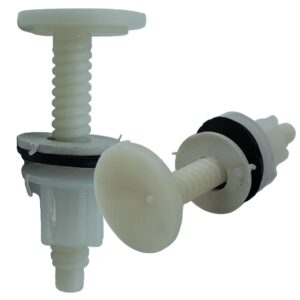
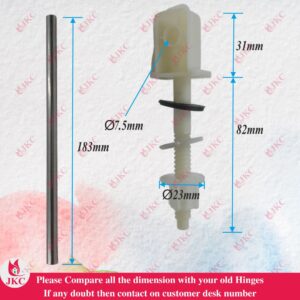
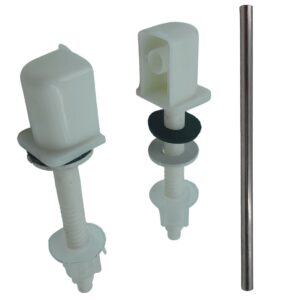
Shop These Parts on JKC Emart:
Material Comparison: Which Toilet Seat Material Is Strongest?
The strongest toilet seat material depends on three factors: load-bearing capacity, resistance to cracking under temperature fluctuations, and long-term colour stability in humid Indian bathrooms. Let us go through each material type in detail.
Duroplast (Urea Formaldehyde Resin) — The Clear Winner
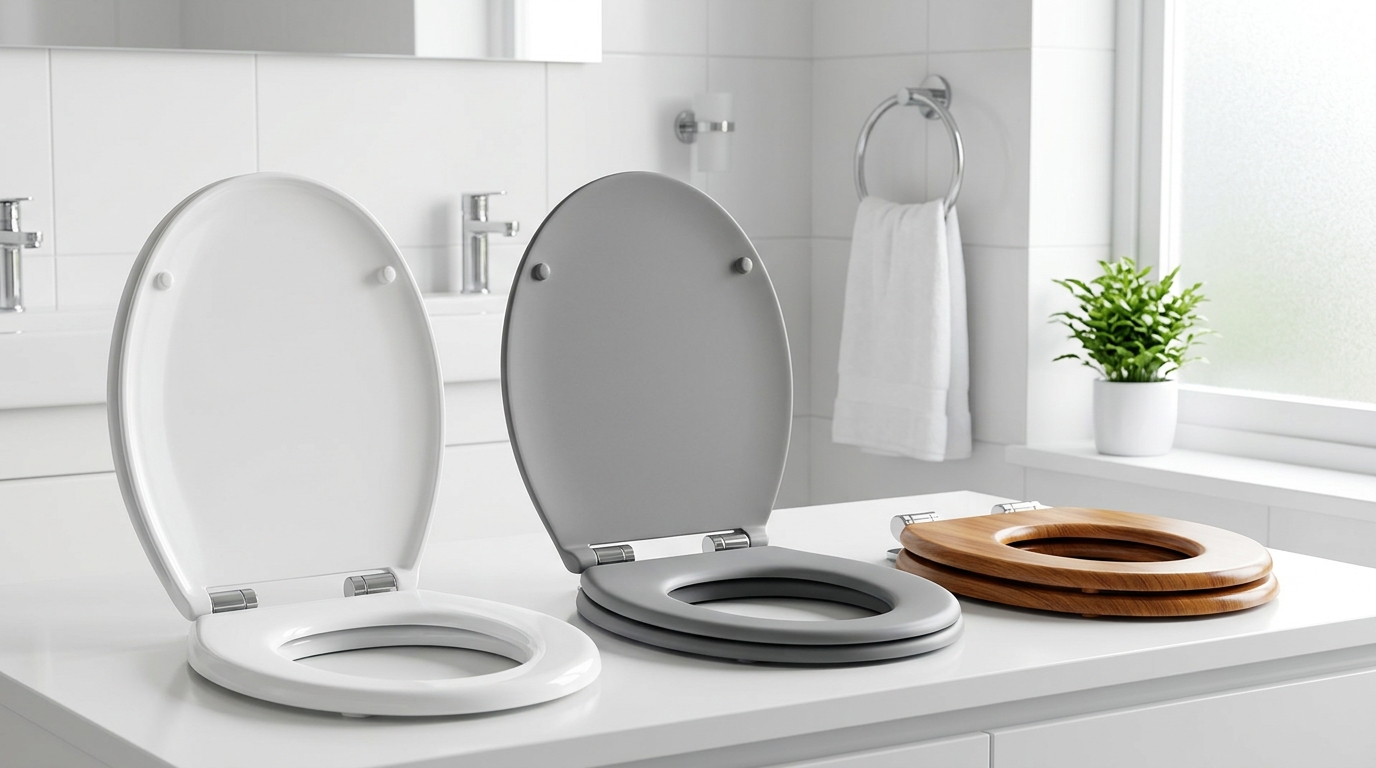
Duroplast is widely regarded as the strongest toilet seat material available in India in 2026. It is a thermosetting resin — meaning once it is moulded and cured, it cannot be softened by heat or humidity. This makes it significantly more resistant to cracking, warping, and discolouration compared to standard plastics.
- Load capacity: Handles 150–200 kg without flexing or cracking
- Heat resistance: Does not warp in temperatures up to 130°C — ideal for hot Indian summers
- Hygiene: Non-porous surface resists bacteria and staining
- Scratch resistance: Harder surface than PP; does not yellow over time
- Lifespan: 10–15 years under normal residential use
- Used by: Jaquar, Cera, Parryware, Kohler, Hindware in their premium seat ranges
Duroplast seats are heavier than polypropylene seats — typically 1.5–2.5 kg — which also contributes to their premium feel and structural rigidity. The hinges on Duroplast seats are usually stainless steel or reinforced nylon, which further adds to durability.
Plumber’s Note: If a customer in a 10-year-old flat in Baner, Pune asks me what seat to buy, I always say Duroplast. It costs more upfront but I rarely get called back for a replacement on those.
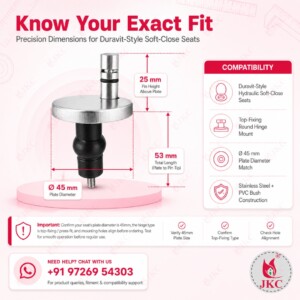
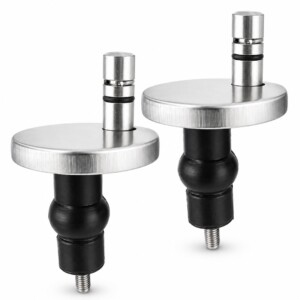
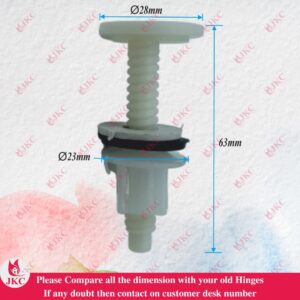
You can view all compatible toilet seat cover hinges for Jaquar and Cera Duroplast seats on JKC Emart, including genuine hinge replacement kits that fit without drilling or modification.
Polypropylene (PP) — Most Common in Indian Homes
Polypropylene is the most widely sold toilet seat material in India, found in nearly 70% of builder-grade apartments. It is a thermoplastic, which means it can be softened by heat — a significant disadvantage in bathrooms that get hot water splashes or direct sunlight.
- Load capacity: Typically 100–120 kg before visible flexing
- Heat resistance: Softens above 80–90°C; prone to warping near geysers
- Cost: ₹350–₹1,800 depending on brand and finish
- Lifespan: 3–7 years; tends to yellow after 2–3 years in humid bathrooms
- Soft-close PP seats: Higher-grade PP with slow-close hinges; better quality than standard PP
PP seats are perfectly acceptable for children’s bathrooms, guest toilets, or low-traffic washrooms. For primary bathrooms used by adults daily, Duroplast is the stronger and smarter choice. Brands like Essco, ARK, Aquel, and LnK offer good mid-range PP seats with reinforced hinges.
MDF Wood Core Seats — Aesthetic but Fragile
MDF (Medium Density Fibreboard) toilet seats have a wood core covered with a resin or lacquer coating. They are popular in European-style bathrooms and luxury home projects but are not recommended for Indian climates with high humidity.
- MDF swells and cracks when exposed to moisture over time
- The coating peels in bathrooms without proper ventilation
- Not suitable for bathrooms in coastal cities like Mumbai, Chennai, or Kochi
- Lifespan: 3–5 years maximum in Indian conditions
- Used mainly in luxury hotel projects with controlled HVAC environments
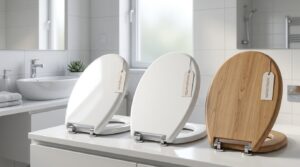
If aesthetics are a priority, choose a Duroplast seat with a wood-grain finish — it gives the same visual appeal without the moisture vulnerability of real MDF.
Stainless Steel and Solid Wood — Niche Applications
Stainless steel toilet seats are used in commercial and industrial settings — bus stations, railway platforms, and public restrooms — where vandal resistance and extreme durability are required. They are not common in Indian residential bathrooms due to their cold feel and high cost (₹4,000–₹12,000+).
- Virtually unbreakable under normal use conditions
- Resistant to chemicals, scratching, and impact
- Not comfortable for home use — cold surface, no cushioning
- Solid teak or bamboo seats are available as luxury options but require sealing and maintenance
Browse Compatible Parts:
Brand Compatibility Guide: Which Seat Fits Your Indian Toilet?
Toilet seat compatibility in India depends on the shape of the toilet pan (round, D-shaped, or elongated), the hinge hole spacing, and the brand’s proprietary fixing system. Not all seats are universal — using the wrong seat leads to wobbling, misaligned covers, and hinge failure within months.
| Brand | Pan Shape | Recommended Seat Material | Hinge Type | Notes |
|---|---|---|---|---|
| Jaquar | D-shape / Elongated | Duroplast | Stainless steel top-fix | Soft-close standard in premium range |
| Cera | D-shape | Duroplast / PP | Nylon top-fix | Compatible with most 400mm hinge spacing |
| Parryware | Round / D-shape | PP / Duroplast | Nylon or SS | Older models use 380mm spacing |
| Hindware | D-shape | PP / Duroplast | Nylon top-fix | Budget range uses PP; premium uses Duroplast |
| Kohler / Grohe | Elongated | Duroplast | Quick-release SS | Proprietary hinge; use brand-specific spares |
| ESS ESS / Marc / Johnson | Round / D-shape | PP | Nylon standard | Standard 380–400mm spacing |
| Geberit / Duravit / Roca | Elongated | Duroplast | Quick-release SS | European sizing; verify before ordering |
The most critical measurement when ordering a replacement seat is the hinge hole centre-to-centre distance. In India, the most common spacings are 380mm and 400mm. Measure your existing seat before placing an order online.
Expert Tip: If you have a Jaquar or Kohler toilet, always order brand-compatible or OEM-equivalent hinges. Generic hinges on premium pans often crack the ceramic at the fixing points due to improper torque distribution.
- Always measure hinge hole spacing (centre to centre) before ordering
- Check if your pan is round, D-shaped, or elongated — seat shape must match
- Verify the fixing method: top-fix bolts vs. bottom-fix bolts
- For imported brands (Grohe, Geberit), use genuine spare hinges to avoid ceramic damage
- JKC Emart stocks genuine compatible hinges for all major Indian and international brands
Hard Water and Indian Climate Considerations for Toilet Seats
India’s water supply across cities like Delhi, Jaipur, Ahmedabad, Surat, and Hyderabad is notoriously hard — with high calcium and magnesium mineral content. While hard water affects taps and flush valves most directly, it also has a significant impact on toilet seat durability and hinge longevity.
How Hard Water Damages Toilet Seat Components
Hard water leaves white limescale deposits around the hinge bolts and under the seat rim. Over time, these deposits corrode nylon hinge pins and cause metal bolts to seize, making the seat impossible to remove without breaking it. This is why many homeowners in Rajasthan and Gujarat find their toilet seats “fused” to the pan after just 2–3 years.
- Hinge corrosion: Calcium deposits accelerate rust on non-stainless metal hinges
- Staining: Hard water causes yellow-brown staining on PP seats that cannot be cleaned off
- Surface pitting: Prolonged mineral exposure pits the surface of low-quality PP seats
- Bolt seizure: Limescale locks hinge bolts, making removal difficult without tools
Best Material Choices for Hard Water Zones
In hard water cities, Duroplast with stainless steel quick-release hinges is the strongest and most practical combination. The non-porous Duroplast surface does not absorb mineral deposits, and the quick-release hinge mechanism allows for regular removal and cleaning without tools.
- Choose stainless steel hinges over nylon or chrome-plated zinc hinges
- Opt for quick-release hinge mechanisms for easy monthly cleaning
- Avoid MDF seats entirely in hard water zones — moisture + minerals destroy the core rapidly
- Apply a thin coat of petroleum jelly on hinge bolts annually to prevent limescale seizure
- Use a citric acid solution (1 tablespoon per litre) monthly to descale hinge areas
Climate Note: In coastal cities like Mumbai, Chennai, and Kochi, salt-laden humid air accelerates corrosion of metal hinge components. Stainless steel Grade 304 or higher is the only recommended hinge material for these locations.
The Indian summer heat (bathroom temperatures reaching 40–45°C in May–June) also affects PP seats — they soften slightly under sustained heat, leading to micro-cracks over time. Duroplast, being thermosetting, remains dimensionally stable even at these temperatures, making it the preferred choice for homes in Rajasthan, Gujarat, and Telangana.
Signs You Need to Replace Your Toilet Seat
Many homeowners in older apartments continue using a damaged toilet seat because the damage seems minor. However, a cracked or wobbly seat is a hygiene risk and a safety hazard — especially for elderly family members and children. Here are the clear signs that a replacement is overdue.
Physical Damage Signs
- Visible cracks or fractures on the seat surface — even hairline cracks harbour bacteria
- Chipped edges that can cause cuts or scratches
- Seat wobbles side to side when in use — indicates hinge failure or loose bolts
- Cover does not stay up on its own — hinge spring is broken
- Seat slides forward during use — hinge posts are worn out
Hygiene and Aesthetic Signs
- Permanent yellowing that does not clean off — surface degradation in PP seats
- Staining that penetrates below the surface — indicates micro-porosity from surface wear
- Persistent bad odour despite cleaning — bacteria embedded in cracks
- Peeling or flaking coating — common in cheap MDF seats after 2–3 years
Safety Alert: A cracked toilet seat that suddenly gives way can cause serious injury. If the crack runs more than 5 cm or passes through a hinge mounting point, replace the seat immediately — do not wait for a plumber visit to schedule it.
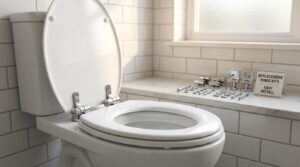
In most cases, only the hinge needs replacement if the seat body is intact. JKC Emart stocks individual hinge kits compatible with Jaquar, Cera, Parryware, and other major Indian brands — saving you the cost of replacing the full seat unit.
Common Mistakes Homeowners Make When Replacing Toilet Seats
Replacing a toilet seat seems straightforward, but Indian homeowners regularly make avoidable errors that result in a second replacement within 12 months. Here are the four most common mistakes and how to avoid them.
Mistake 1: Buying by Price Alone
The cheapest PP seat available on a local hardware store shelf in Chandni Chowk or Laad Bazaar is tempting at ₹300–₹400. However, these unbranded seats use recycled or low-grade polypropylene that yellows within 6 months and cracks under normal adult body weight within 1–2 years.
- Always check the material specification — ask for Duroplast or virgin PP
- Branded mid-range seats (₹800–₹1,800) from Essco or ARK offer 3–5× the lifespan of economy options
- The cost difference between economy and standard is ₹400–₹1,000 — far less than the cost of a second replacement
Mistake 2: Not Measuring the Pan Before Ordering
Ordering a seat without measuring the pan is the single most common reason for returns and exchanges in online toilet seat purchases. A seat that is 2–3 cm too long or too short looks wrong, fits poorly, and stresses the hinge bolts unevenly.
- Measure the pan length (front to back, outside edge to outside edge)
- Measure the pan width at the widest point
- Measure hinge hole spacing (centre to centre)
- Note the pan shape: round, D-shaped (most common in India), or elongated
Mistake 3: Ignoring Hinge Quality
Many homeowners buy a premium Duroplast seat and then accept the cheapest nylon hinge that comes with it. The hinge is the highest-stress component — it bears the full weight of the seat and user impact thousands of times per year.
- Always choose stainless steel hinges for primary bathrooms
- Quick-release hinges are worth the extra ₹100–₹200 for cleaning convenience
- Check that hinge bolts are stainless steel or brass — not chrome-plated zinc
Mistake 4: Over-Tightening the Hinge Bolts
A very common mistake during DIY installation — homeowners over-tighten the hinge nuts to “make sure it doesn’t move,” which actually cracks the ceramic pan at the hinge holes. Toilet ceramic is strong in compression but brittle under point-load stress from over-torqued bolts.
- Tighten hinge bolts finger-tight plus a quarter turn — nothing more
- Use the plastic washers provided — they distribute load and protect the ceramic
- If the seat still wobbles after correct tightening, the hinge post is worn and needs replacement
How to Buy the Right Toilet Seat or Hinge Online in 2026
Buying a toilet seat or hinge online without a plumber’s help is entirely achievable if you follow a systematic approach. Indian e-commerce platforms including JKC Emart make it straightforward with detailed product specifications and brand compatibility information.
Step 1: Identify Your Toilet Brand and Model
Check the underside of the toilet tank or the inside of the pan rim — most brands stamp their name and model number there. Jaquar, Cera, Parryware, and Hindware all use visible brand stamps. If you cannot find it, take a photo of the toilet from the front and side and contact the JKC Emart support team at +91 97269 54303 or cu**********@******rt.in for identification help.
Step 2: Measure Before You Order
- Pan length: Measure from the back wall (behind the hinge holes) to the front of the pan
- Pan width: Measure the widest point of the pan
- Hinge hole spacing: Centre to centre distance between the two hinge mounting holes
- Hinge hole diameter: Usually 18mm or 22mm in Indian pans
Step 3: Choose the Right Material for Your Needs
- Primary bathroom, heavy daily use: Duroplast with SS quick-release hinges
- Guest toilet, light use: Standard PP with nylon hinges is sufficient
- Hard water city (Delhi, Jaipur, Ahmedabad): Duroplast + SS hinges mandatory
- Coastal city (Mumbai, Chennai): SS Grade 304 hinges essential
- Budget replacement: Mid-range PP from Essco or ARK
Step 4: Verify Return and Shipping Policy
Always order from platforms that offer a clear return policy. JKC Emart provides 7-day easy returns and free shipping on orders above ₹499 across India — making it safe to order online even if you are unsure about sizing. Their Amazon India store also lists the same genuine parts with Prime delivery options.
Step 5: Check for Genuine Parts Certification
Counterfeit toilet seat hinges are common on unregulated marketplaces. Genuine hinges from JKC Emart are sourced directly from brand-authorised suppliers and carry the manufacturer’s markings. You can order genuine toilet seat cover hinges and replacement parts directly on JKC Emart with confidence in part authenticity.
Step 6: Use Customer Support for Confirmation
If you are still unsure after measuring, send your measurements and a photo of your toilet to JKC Emart’s customer care. The team confirms compatibility before you place the order — eliminating the risk of ordering the wrong part.
Ready to Order? Here Are the Top Picks:
Frequently Asked Questions About Toilet Seat Materials in India
Q1: Which is better — Duroplast or Polypropylene toilet seat for Indian homes?
Duroplast is definitively stronger and more durable than Polypropylene for Indian residential use. Duroplast is a thermosetting resin that does not warp, yellow, or crack under normal bathroom conditions, while PP is a thermoplastic that softens under heat and degrades faster in humid environments. For primary bathrooms used by adults daily, Duroplast is worth the higher upfront cost of ₹1,800–₹4,000 because it lasts 10–15 years versus 3–5 years for standard PP. If budget is a concern, choose a mid-range PP seat from a reputable brand like Essco or ARK rather than an unbranded economy option.
Q2: What is the standard toilet seat size for Indian toilets in 2026?
The most common toilet pan dimensions in Indian residential apartments are 430–450mm in length and 340–360mm in width, with a D-shaped (also called elongated-round) profile. The standard hinge hole spacing is 380mm or 400mm centre-to-centre, with 400mm being the most common in post-2015 construction. However, older toilets from brands like Parryware and Johnson (pre-2010 models) often use 380mm spacing. Always measure your specific toilet before ordering — even within the same brand, different models have different dimensions.
Q3: Can I replace just the hinge on my toilet seat, or do I need to replace the full seat?
In most cases, you only need to replace the hinge if the seat body is structurally intact — no cracks, chips, or severe staining. Hinge replacement kits for major Indian brands cost ₹150–₹800 depending on the brand and hinge type, compared to ₹800–₹4,000 for a full seat replacement. JKC Emart stocks individual hinge kits compatible with Jaquar, Cera, Parryware, Hindware, Kohler, and many other brands. The replacement takes 5–10 minutes with basic tools and no plumber is required in most cases.
Q4: How do I stop my toilet seat from yellowing in India?
Yellowing in PP toilet seats is caused by UV exposure, hard water mineral deposits, and chemical reactions with cleaning agents — particularly bleach-based cleaners used widely in Indian homes. To prevent yellowing: use pH-neutral bathroom cleaners instead of bleach, keep the bathroom well-ventilated to reduce humidity, and wipe the seat dry after cleaning. However, once a PP seat has yellowed significantly, the discolouration is permanent and replacement is the only solution. Switching to a Duroplast seat eliminates the yellowing problem entirely because the surface is non-porous and UV-stable.
Q5: Is it safe to buy toilet seat hinges online without seeing the product physically?
Yes — buying toilet seat hinges online is completely safe if you follow a few precautions. First, always purchase from verified sellers with genuine product certifications — platforms like JKC Emart and their Amazon India store list authentic spare parts with detailed specifications. Second, measure your hinge hole spacing and pan dimensions before ordering. Third, check the return policy — JKC Emart offers 7-day easy returns so you can exchange if the size does not fit. Finally, use the customer support contact (+91 97269 54303) to confirm compatibility before placing your order — this eliminates any guesswork entirely.
Conclusion: Make the Right Material Choice and Save Money Long-Term
Choosing the strongest toilet seat material is not about spending the most — it is about understanding your bathroom’s specific conditions and matching the material to those needs. For the vast majority of Indian homes in 2026, Duroplast with stainless steel quick-release hinges is the optimal combination: strongest, most hygienic, and most resistant to India’s hard water, humidity, and heat. Polypropylene seats from reputable brands are a sensible budget choice for light-use bathrooms, but economy unbranded seats are a false economy that cost more over time in repeated replacements.
Whether you need a full seat replacement or just a hinge kit for your Jaquar, Cera, Parryware, or Hindware toilet, JKC Emart stocks genuine compatible parts with pan-India free shipping on orders above ₹499, 7-day easy returns, and expert support to help you identify the correct part. Their parts are also available on Amazon India for Prime delivery convenience. Do not wait for a cracked seat to become a safety hazard — order the right part today and fix it yourself in under 10 minutes.
About author


Add comment
You must be logged in to post a comment.