
Are Plastic Toilet Seats Cheap? Best Picks in India 2026
Are Plastic Toilet Seats Cheap? Best Picks in India 2026
Introduction
In a Satellite area apartment in Ahmedabad, a cracked toilet seat with a broken hinge is one of the most common bathroom complaints that leads homeowners to call a plumber — only to be told the entire toilet unit might need replacement. That advice is almost always unnecessary. Plastic toilet seat price in India 2026 has remained surprisingly accessible, making a straightforward seat replacement the smarter, faster, and far more economical solution for most households.
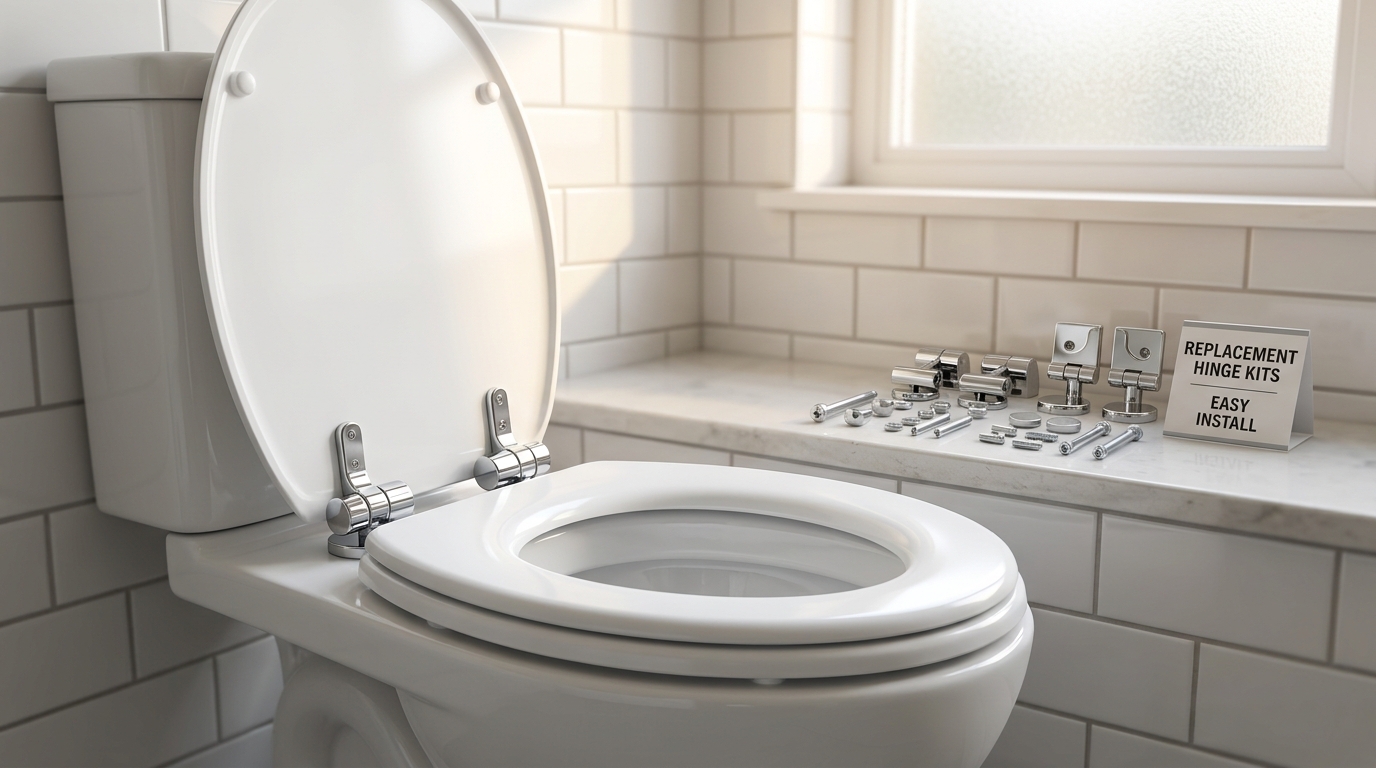
Whether your current seat has yellowed, snapped at the hinge, or simply wobbles every time someone sits down, you do not need to spend thousands on a new toilet fixture. A quality replacement plastic toilet seat — complete with compatible hinges — can solve the problem in under 30 minutes. You can browse toilet seat cover hinges and compatible replacement parts on JKC Emart to find the right fit for your existing toilet brand without guesswork.
Plastic Toilet Seat Price Guide India 2026
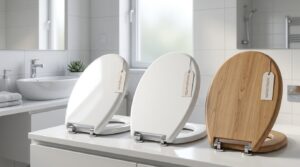
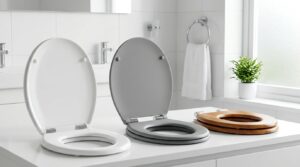
One of the most searched questions among Indian homeowners is whether plastic toilet seats are genuinely affordable or whether the low price tag means poor quality. The honest answer: it depends entirely on which tier you buy from. The Indian market in 2026 offers three distinct price segments for plastic toilet seats, each with different material grades, hinge quality, and brand backing.
Raw material costs for polypropylene and ABS plastic used in toilet seat manufacturing have seen a 10–15% increase since 2022, which has pushed some entry-level prices upward. However, even premium-tier plastic seats remain significantly cheaper than thermosetting resin or soft-close seats. Here is a clear breakdown of what you can expect to pay across all three tiers in 2026:
| Tier | Seat Price Range (INR) | Hinge Kit Cost (INR) | Combined Part + Installation | Brand Examples |
|---|---|---|---|---|
| Generic / Unbranded | ₹180 – ₹450 | ₹60 – ₹120 | ₹350 – ₹700 | Local market / unbranded |
| Standard / Mid-Range | ₹500 – ₹1,200 | ₹120 – ₹250 | ₹800 – ₹1,700 | Essco, ARK, Aquel, LnK, LMC |
| Premium / Brand-Compatible | ₹1,300 – ₹3,500 | ₹250 – ₹600 | ₹1,800 – ₹4,500 | Jaquar, Cera, Parryware, Hindware, Johnson, Kohler, Roca |
For most Indian homes with standard EWC or Western Commode toilets, a standard-tier plastic seat with compatible hinges in the ₹500–₹1,200 range is the sweet spot — durable, hygienic, and brand-compatible without overspending. Premium seats from Jaquar or Cera make sense for high-use bathrooms in commercial properties or upscale residences.
- Polypropylene (PP) seats — lightest and most affordable, ideal for low-traffic guest bathrooms
- ABS plastic seats — harder, more scratch-resistant, better for daily use in family bathrooms
- Virgin ABS seats — top-quality plastic with UV resistance and anti-yellowing properties
- Soft-close hinge seats — available in all three tiers at a slight premium; prevents slamming
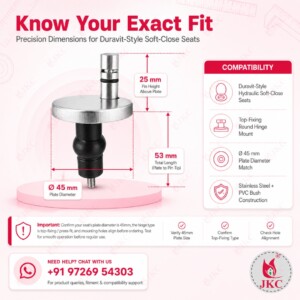
Pro Tip: Always check whether the hinge hole spacing on your toilet bowl matches the seat you are ordering. Standard Indian EWC toilets typically have a bolt hole spacing of 145mm to 165mm. Measure before you order to avoid returns.
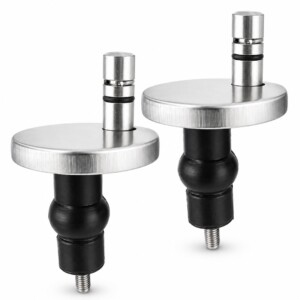
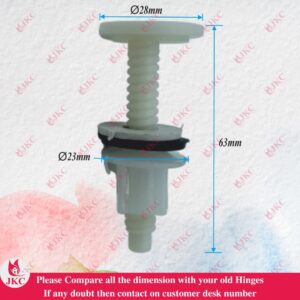
Shop These Parts on JKC Emart:
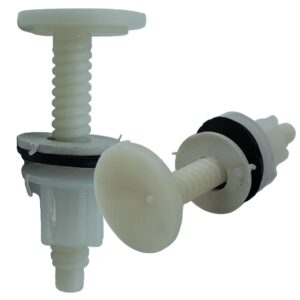
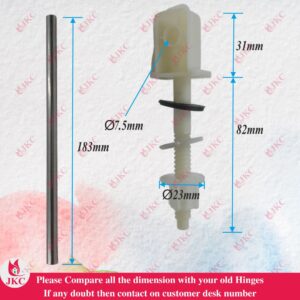
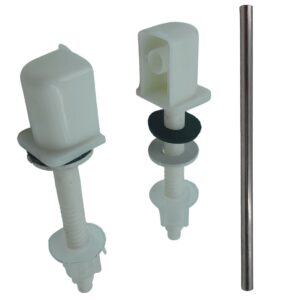
Brand Compatibility Guide
One of the biggest pain points for Indian homeowners is ordering a toilet seat online and receiving something that does not fit their toilet bowl shape or hinge mounting. This happens because different sanitaryware brands use different bowl rim shapes — D-shaped, O-shaped, and square-round hybrid — and the seat must match accordingly. Knowing which seat fits which brand saves you the hassle of returns and plumber revisits.
In 2026, the most popular toilet brands in Indian homes include Jaquar, Cera, Parryware, Hindware, Johnson, ESS ESS, Marc, and Roca. Each brand has specific seat dimensions, and many of their spare seats are now available as compatible aftermarket replacements at a fraction of the original brand price. You can view all brand-compatible toilet seat cover hinges at JKC Emart to find the exact match for your toilet model.
- Jaquar toilets — typically use D-shaped seats; hinge spacing 155mm; compatible with Jaquar OEM and premium aftermarket seats
- Cera toilets — standard O-shape and D-shape variants; hinge spacing 145–160mm; Essco and ARK compatible seats available
- Parryware toilets — older models use wider oval seats; newer EWC models align with standard 155mm spacing
- Hindware toilets — mostly D-shaped with 150mm hinge spacing; compatible with LnK and LMC aftermarket seats
- Johnson Suisse toilets — European-style bowl shapes; slightly larger seat dimensions; require brand-specific or premium aftermarket seats
- Roca / Kohler / Grohe — imported bowl shapes; always verify dimensions before ordering; premium seats recommended
Plumber Insight: If you have lost the toilet model number (which is usually stamped underneath the toilet tank), measure the outer length of the bowl rim from front to back and the maximum width. These two measurements, combined with the hinge hole spacing, are enough to identify the correct seat size for any brand.
For commercial properties — hotels, offices, hospitals in cities like Mumbai, Hyderabad, and Bangalore — the preference is shifting toward ABS plastic seats with stainless steel hinge fittings from brands like Jaquar and Cera, as these withstand high-frequency use without cracking or discolouring within the first year.
Browse Compatible Parts:
Signs You Need to Replace Your Toilet Seat
Many Indian homeowners delay replacing a damaged toilet seat because they assume it is a cosmetic issue. In reality, a cracked or broken seat is a hygiene and safety concern — particularly in households with elderly members or young children. Recognising the right warning signs early saves you from a more expensive fix later.
The most common sign is visible cracking along the seat surface or near the hinge attachment points. Even hairline cracks harbour bacteria and are impossible to clean thoroughly, making them a genuine health risk in a high-humidity Indian bathroom environment.
- Cracked or chipped seat surface — even small cracks collect bacteria and cannot be sanitised properly
- Wobbly or loose seat — broken or worn hinge bolts cause the seat to shift sideways during use
- Yellowing or permanent staining — UV degradation and hard water deposits cause irreversible discolouration in older PP seats
- Broken hinge mechanism — the seat stays upright or falls without control; soft-close function stops working
- Foul odour despite cleaning — micro-cracks and degraded plastic absorb odour-causing bacteria over time
- Seat no longer stays closed — worn hinge spring or broken clip allows the seat to slide open on its own
Pro Tip: In Indian cities with hard water — including Delhi, Jaipur, Surat, and Lucknow — mineral deposits from water splashing accelerate hinge corrosion. Check the underside of your seat hinges every 6 months for rust or calcium buildup, especially if your water supply has high TDS levels.
As a general rule, plastic toilet seats in Indian homes should be replaced every 3–5 years under normal use. High-traffic bathrooms — more than 4–5 users daily — may need replacement every 2 years, particularly if the seat is a generic PP variety rather than a more durable ABS grade.
Step-by-Step DIY Installation Guide
Replacing a plastic toilet seat is one of the easiest bathroom DIY tasks an Indian homeowner can do without calling a plumber. The entire process takes 15 to 30 minutes with basic tools you likely already have at home. No specialised plumbing knowledge is needed — just patience and the right replacement seat.
Tools You Will Need
- Adjustable spanner or pliers
- Flathead screwdriver
- Mild cleaning spray and cloth
- New toilet seat with compatible hinge kit
Phase 1 — Remove the Old Seat
Locate the two plastic or metal bolt caps at the back of the toilet bowl rim where the seat is attached. Flip these caps open to expose the hinge bolts underneath. Use a flathead screwdriver to hold the bolt steady from the top while you unscrew the nut from beneath the bowl using pliers or a spanner.
Once both nuts are removed, lift the old seat straight up and off the bowl. Clean the hinge mounting area thoroughly with a mild disinfectant spray before fitting the new seat — this step is often skipped but is important for hygiene.
Phase 2 — Fit the New Seat
Position the new seat so that the hinge bolt holes align with the mounting holes on the toilet bowl rim. Insert the hinge bolts from the top, thread the plastic or metal nuts from below, and hand-tighten first. Use your spanner to snug the nuts firmly — do not overtighten, as this can crack the porcelain rim or the seat hinge plate.
- Check that the seat sits evenly and does not rock side to side
- Open and close the seat a few times to confirm smooth hinge action
- If the seat has a soft-close mechanism, verify that it lowers slowly without slamming
- Snap the bolt caps closed over the hinge bolts for a clean finish
Phase 3 — Final Check
Sit on the seat carefully to test stability. A properly installed seat should not shift, rotate, or make creaking sounds. If you notice any movement, re-tighten the hinge bolts by a quarter turn at a time until the seat is firmly in place.
Pro Tip: If your toilet bowl has a concealed cistern or a wall-hung design — common in newer Pune and Bangalore apartments — the hinge bolt access may be from the front of the seat rather than the back. Check your seat’s installation guide before starting.
Hard Water and Indian Climate Considerations
India’s water supply across most major cities contains significantly elevated levels of dissolved minerals — primarily calcium and magnesium — which classify it as hard water. Cities like Delhi, Jaipur, Surat, Nagpur, and parts of Hyderabad regularly record TDS levels above 500 ppm, well beyond the ideal range of 150–300 ppm for household use. This directly impacts the longevity of plastic toilet seats and their hinge fittings.
Hard water splashing and evaporating on the underside of toilet seats leaves behind white calcium deposits that are abrasive and gradually degrade plastic surfaces. Over time, these deposits also corrode metal hinge bolts and nuts, making future seat removal difficult without damaging the toilet bowl rim.
- Use ABS plastic seats over PP — ABS is harder and more resistant to mineral abrasion than standard polypropylene
- Choose stainless steel hinge hardware — plastic hinge bolts degrade faster in high-humidity, hard water environments
- Apply a thin layer of silicone grease on hinge bolt threads during installation to prevent calcium seizure
- Clean with vinegar solution monthly — diluted white vinegar dissolves calcium deposits without damaging the plastic seat surface
- Avoid bleach-based cleaners — chlorine bleach accelerates yellowing and surface degradation in plastic seats, particularly in direct sunlight bathrooms
Plumber Insight: In coastal cities like Chennai and Mumbai, the combination of high humidity and salt-laden air accelerates metal hinge corrosion even faster than hard water alone. For bathrooms in these cities, always opt for seats with fully plastic quick-release hinge systems — they are easier to remove for cleaning and have no metal to corrode.
The Indian climate also brings extreme temperature variation — from winter cold in North India to peak summer heat above 45°C in Rajasthan and Gujarat. Low-grade plastic seats can warp or become brittle under these thermal extremes. Virgin ABS seats rated for 60°C+ thermal tolerance are the best choice for homes in high-temperature regions.
Common Mistakes Homeowners Make When Replacing Toilet Seats
Despite being a simple DIY task, toilet seat replacement has a surprisingly high rate of errors among first-time buyers in India. These mistakes lead to wasted money, damaged toilet bowls, or seats that fail within months of installation. Here are the four most common mistakes — and exactly how to avoid them.
Mistake 1 — Buying Without Measuring the Bowl
The most frequent error is purchasing a toilet seat based on brand name alone without verifying the bowl shape and hinge hole spacing. Not all Jaquar toilets use the same seat dimensions, and not all Cera toilets have the same bolt hole spacing. Always measure the outer bowl length, maximum width, and hinge hole centre-to-centre distance before ordering.
Mistake 2 — Choosing Generic Seats for High-Traffic Bathrooms
Generic PP seats priced below ₹300 are manufactured with recycled plastic and thin hinge brackets. In a household with 4+ daily users, these seats typically crack within 6–12 months. Spending ₹800–₹1,200 on a mid-range ABS seat upfront saves you from replacing it again within a year.
Mistake 3 — Overtightening the Hinge Bolts
Many homeowners tighten hinge bolts as firmly as possible, assuming this prevents wobbling. Overtightening actually cracks the ceramic bowl rim — an expensive and irreversible mistake. Tighten until snug and firm, then stop. The seat should not move, but the bolt should not be torqued beyond hand-tight plus a quarter turn.
Mistake 4 — Ignoring Hinge Compatibility
Buying a seat and a hinge kit separately without checking compatibility is another common error. Some seats come with integrated hinge plates that only work with specific bolt sizes. Always purchase the seat and its matching hinge kit together, or confirm that your existing hinge hardware is compatible with the new seat before ordering.
- Always measure first — bowl length, width, and hinge spacing
- Match seat material to bathroom usage frequency
- Never overtighten — snug is sufficient
- Buy seat and hinge kit as a matched set when possible
How to Buy the Right Toilet Seat Online
Buying a toilet seat online in India in 2026 is far more straightforward than it was even three years ago — provided you know what information to gather before you start browsing. The rise of structured product listings on platforms like JKC Emart has made it easier to filter by brand, bowl shape, and hinge type without needing a plumber’s help.
Here are six practical tips to confidently order the correct plastic toilet seat without making a costly mistake:
- Identify your toilet brand and model — check the toilet tank underside or the bowl base for a stamped model number. This is the most reliable starting point for finding a compatible seat.
- Measure three key dimensions — outer bowl length (front to back), maximum bowl width, and hinge hole centre-to-centre spacing. Write these down before visiting any product page.
- Choose the right plastic grade — PP for guest bathrooms with light use; ABS for main bathrooms; Virgin ABS for premium finish and UV resistance.
- Check hinge type — standard fixed hinges, quick-release hinges (for easy cleaning), or soft-close hinges. Confirm the hinge type matches your preference and existing bolt holes.
- Read product dimensions carefully — reputable sellers like JKC Emart list seat dimensions, hinge spacing, and compatible brands clearly in product descriptions. Do not order from listings that lack these details.
- Verify return policy before ordering — even with careful measurement, fitment issues can occur. Always buy from a seller offering a clear return window. JKC Emart offers a 7-day easy return policy on all spare parts.
You can order the correct toilet seat cover and hinge kit on JKC Emart with confidence — products are listed with full brand compatibility details, dimension specifications, and genuine quality assurance. Free shipping is available on orders above ₹499, which covers most single seat purchases.
Pro Tip: If you are unsure about compatibility after measuring, contact JKC Emart’s customer support at +91 97269 54303 or email cu**********@******rt.in with your toilet brand, model number, and measurements. Their team can confirm the right part before you place the order.
Ready to Order? Here Are the Top Picks:
Frequently Asked Questions
Q1. What is the average plastic toilet seat price in India in 2026?
In 2026, plastic toilet seat prices in India range from as low as ₹180 for basic unbranded PP seats to ₹3,500 or more for premium brand-compatible ABS seats from manufacturers like Jaquar, Cera, and Parryware. The most popular price bracket for Indian households is the mid-range segment between ₹500 and ₹1,200, which offers ABS construction, compatible hinge kits, and decent longevity for everyday family use. When you add installation cost (typically ₹150–₹300 if hiring a plumber), the total replacement cost for a standard toilet seat remains well under ₹1,500 for most homes. This makes seat replacement one of the most cost-effective bathroom maintenance decisions you can make.
Q2. Are cheap plastic toilet seats worth buying, or should I spend more?
Cheap plastic seats priced below ₹300 are made from recycled polypropylene and typically last only 1–2 years under daily use before cracking or yellowing. They are acceptable for a rarely used guest bathroom but not for a main family bathroom. Mid-range ABS seats in the ₹700–₹1,200 range offer significantly better durability, cleaner finishes, and more reliable hinge mechanisms — making them worth the modest price difference. For high-traffic bathrooms or premium bathrooms, investing in a brand-compatible seat from Jaquar or Cera at ₹1,500–₹3,000 is a better long-term decision. The rule of thumb: buy the cheapest seat only when you are confident it will see very light use.
Q3. How do I know which toilet seat fits my toilet brand in India?
The most reliable method is to check the model number stamped on your toilet tank or bowl base, then match it against the compatibility list provided by the seat seller. If the model number is unavailable, measure three dimensions: the outer bowl length from front to back, the maximum bowl width, and the centre-to-centre distance between the two hinge bolt holes. Most Indian EWC toilets from brands like Jaquar, Cera, Hindware, and Parryware have a hinge spacing between 145mm and 165mm. Providing these three measurements to a seller like JKC Emart is enough to identify the correct compatible seat without needing the model number.
Q4. Can I replace a toilet seat myself without a plumber?
Yes — replacing a toilet seat is one of the simplest bathroom DIY tasks available to Indian homeowners. You need only a flathead screwdriver and a pair of pliers or an adjustable spanner, both of which are standard household tools. The entire process of removing the old seat and installing the new one takes 15 to 30 minutes for a first-time DIYer. The key steps are: remove the old hinge bolt caps, unscrew the nuts from below the bowl rim, lift off the old seat, clean the mounting area, position the new seat, insert the hinge bolts, tighten the nuts from below, and snap the caps closed. No water supply needs to be turned off, and no plumbing connections are involved.
Q5. Do plastic toilet seats fit all Indian toilets, or are there different sizes?
Plastic toilet seats do not follow a single universal size in India — there are meaningful differences between brands and even between different models from the same brand. The two main bowl shapes are D-shaped (elongated) and O-shaped (round), and the seat must match the bowl shape for a proper fit and comfortable use. Additionally, hinge hole spacing varies between 145mm and 165mm across different Indian toilet brands. Imported toilet brands like Kohler, Grohe, Roca, and Duravit often use slightly larger or differently shaped bowls that require brand-specific or premium aftermarket seats. Always measure your specific toilet before ordering rather than assuming a standard size will fit.
Conclusion
Plastic toilet seats in India in 2026 are genuinely affordable — but “cheap” does not have to mean low quality. The right seat for your bathroom depends on your toilet brand, usage frequency, water quality, and budget. A well-chosen mid-range ABS seat with compatible hinges, installed correctly, will serve your bathroom reliably for 4–6 years without cracking, yellowing, or loosening. The total cost — seat plus hinges plus optional plumber visit — typically stays well under ₹1,500 for most Indian homes, making this one of the most cost-effective bathroom upgrades available.
JKC Emart stocks a curated range of genuine, brand-compatible toilet seat covers and hinge kits for all major Indian sanitaryware brands including Jaquar, Cera, Parryware, Hindware, Johnson, ESS ESS, and more. Every part is quality-verified, clearly listed with dimensions and brand compatibility, and backed by a 7-day easy return policy. With pan-India free shipping on orders above ₹499, you can have the right replacement seat delivered to your door in Surat, Chennai, Lucknow, or anywhere across India without a minimum spend that stretches your budget. JKC Emart parts are also available on Amazon India for added convenience and buyer protection.
Stop putting up with a cracked, wobbly, or yellowed toilet seat. The fix is simpler and more affordable than you think.
About author


Add comment
You must be logged in to post a comment.