
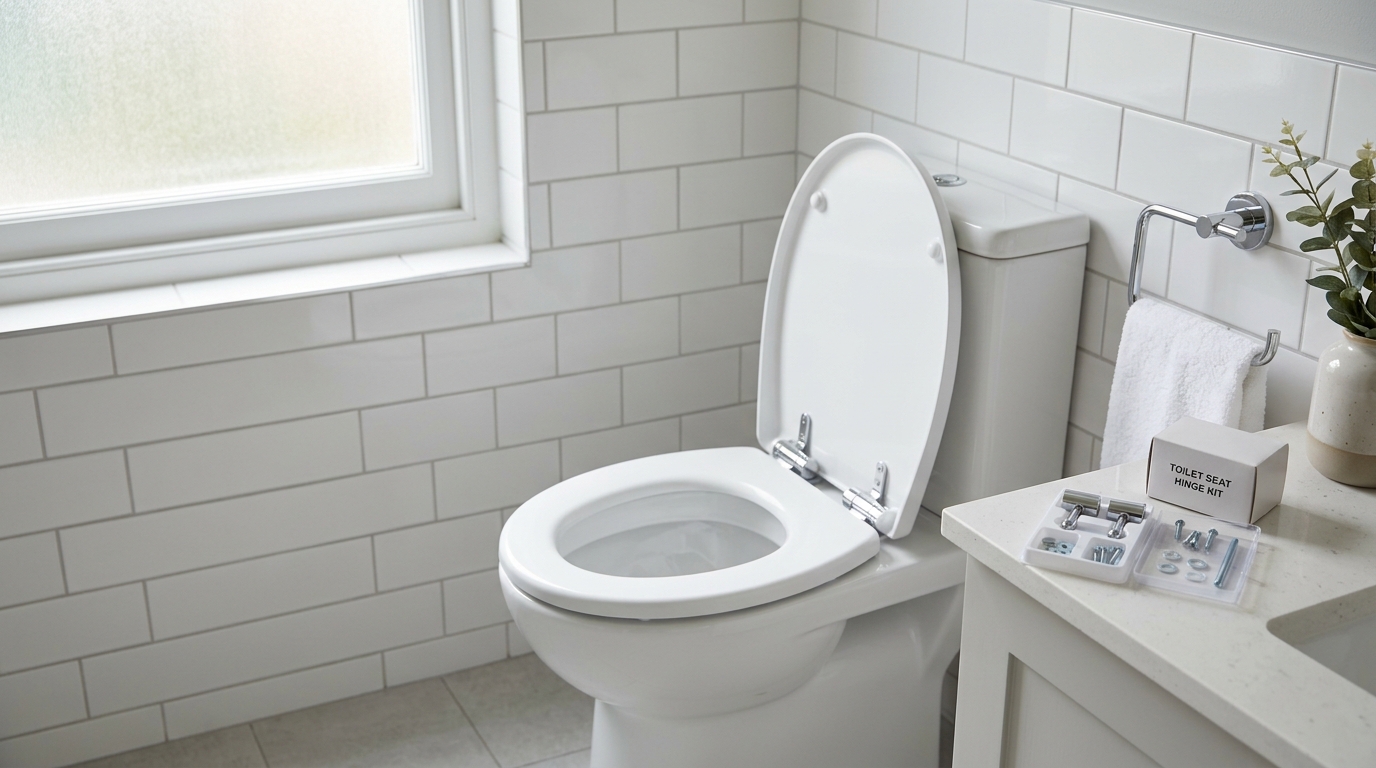
Toilet Seat Lifespan: How Long Does It Last? 2026 Guide
Toilet Seat Lifespan: How Long Does It Last? 2026 Guide
In older housing societies across areas like Borivali West in Mumbai or Rajajinagar in Bangalore, one of the most overlooked bathroom problems is a cracked, wobbly, or discoloured toilet seat. Most homeowners replace the entire toilet unit when, in reality, only the seat or its hinge needs attention. Understanding toilet seat lifespan and replacement in India can save you thousands of rupees and a full day’s plumber visit. If your seat is creaking, yellowing, or the hinges have snapped, you can browse compatible toilet seat cover hinges and replacement parts before calling anyone — and in most cases, fix it yourself in under 20 minutes.
2026 Toilet Seat Price Guide (INR)
Before you decide whether to repair or replace your toilet seat, it helps to know what you’re actually spending. In 2026, toilet seat prices in India have risen by roughly 10–15% compared to 2022 levels, largely due to raw material and polymer cost increases. The good news is that even premium-brand replacement seats remain far cheaper than buying a new toilet unit.
Below is a realistic price breakdown for toilet seats and hinge replacement kits across different quality tiers available in the Indian market:
| Tier | Brand Examples | Seat Only (INR) | Hinge Kit Only (INR) | Seat + Installation Est. (INR) |
|---|---|---|---|---|
| Generic / Local | Unbranded, local OEM | ₹250 – ₹550 | ₹80 – ₹150 | ₹500 – ₹900 |
| Standard / Mid-Range | Essco, ARK, Aquel, LMC, Goldline | ₹600 – ₹1,400 | ₹150 – ₹350 | ₹900 – ₹1,900 |
| Premium / Brand | Jaquar, Cera, Parryware, Hindware, Johnson, Roca | ₹1,500 – ₹4,500 | ₹350 – ₹800 | ₹2,000 – ₹5,500 |
| Luxury / Imported | Kohler, Grohe, Duravit, American Standard, Geberit | ₹4,500 – ₹18,000+ | ₹800 – ₹2,500 | ₹5,500 – ₹20,000+ |
Pro Tip: In most cases, only the hinge has failed — not the seat itself. Replacing just the hinge kit costs ₹80–₹800 depending on brand, and the seat can continue for several more years. Always check the hinge condition before ordering a full replacement seat.
- Plumber visit charges for toilet seat replacement: ₹200–₹500 in most Indian cities (2026 rates)
- DIY replacement saves you the plumber fee entirely
- Hinge-only replacement is the most cost-effective first step
- Soft-close hinge upgrades add ₹200–₹600 but significantly extend seat life
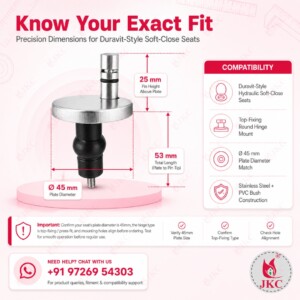
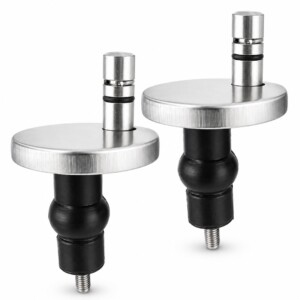
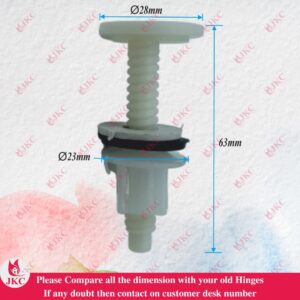
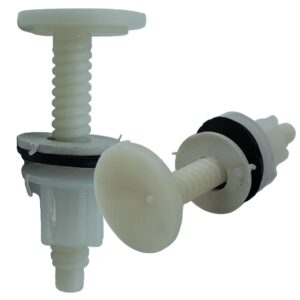
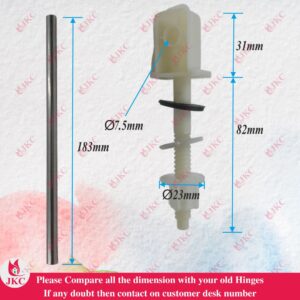
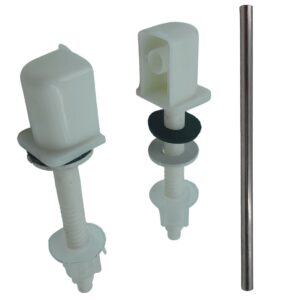
Shop These Parts on JKC Emart:
How Long Does a Toilet Seat Actually Last?
A standard toilet seat in Indian homes typically lasts between 5 to 15 years, depending on the material, usage frequency, and maintenance habits. High-traffic bathrooms in joint families or commercial spaces can see wear in as little as 3–4 years, while a well-maintained seat in a single-person household may last well over a decade.
The toilet seat lifespan and replacement decision in India is often driven not just by physical damage but by hygiene concerns, discolouration, and hinge failure. Many homeowners in cities like Ahmedabad and Hyderabad continue using cracked seats simply because they don’t know replacement parts are easily available online.
Material and Its Impact on Lifespan
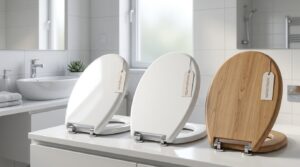
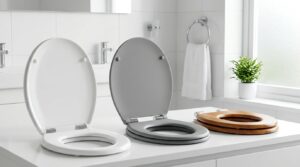
The material of your toilet seat is the single biggest factor in how long it lasts. Indian homes typically have one of three types:
- Duroplast (Thermosetting Plastic): The most durable option — lasts 10–15 years. Used in Jaquar, Roca, and Duravit seats. Resistant to yellowing and cracking.
- Polypropylene (PP): Mid-range durability — lasts 5–8 years. Most common in standard Indian homes. Susceptible to UV yellowing over time.
- MDF / Wood Core Seats: Found in older homes — lasts 3–6 years. Prone to swelling and chipping in humid Indian bathrooms.
- Stainless Steel Hinges: Outlast the seat itself if maintained. Plastic hinges fail in 2–5 years under regular use.
Usage Patterns That Shorten Lifespan
Plumber Insight: “The number one reason toilet seats fail early in Indian homes is standing on the seat rim or slamming the lid. Soft-close hinges prevent lid-slamming damage and can double the effective life of your seat.”
- Using harsh chemical cleaners (acid-based bathroom cleaners) that degrade plastic
- Leaving the seat wet for extended periods — especially in monsoon months
- Using the seat as a step stool — exceeds weight limits and cracks the mounting points
- Ignoring early hinge looseness — leads to seat shifting and stress fractures
Brand Compatibility Guide: Which Seats Fit Which Toilets
One of the most common mistakes Indian homeowners make is ordering a toilet seat without checking compatibility with their existing toilet bowl. Unlike taps or flush valves, toilet seats are not universally interchangeable — the fixing hole distance (also called the hinge bolt spacing) varies by brand and model.
You can view all compatible toilet seat cover hinges by brand at JKC Emart to find the right match for your toilet without guessing. The key measurement is the distance between the two hinge bolt holes at the back of the toilet bowl — typically ranging from 140mm to 185mm in Indian toilets.
Standard Hinge Hole Spacings by Brand
| Brand | Common Fixing Distance | Seat Shape | Compatible Hinge Type |
|---|---|---|---|
| Jaquar | 155mm – 165mm | Elongated / D-shape | Top-fix / Bottom-fix |
| Cera | 150mm – 160mm | Round / Elongated | Bottom-fix standard |
| Parryware | 155mm – 170mm | Elongated | Top-fix preferred |
| Hindware | 150mm – 165mm | Round / D-shape | Bottom-fix standard |
| Johnson / Roca | 160mm – 180mm | Elongated | Top-fix / Quick-release |
| Kohler / American Standard | 165mm – 185mm | Elongated | Quick-release / Top-fix |
Always measure your existing toilet’s fixing hole distance before ordering. A mismatch of even 10mm will mean the hinge bolts won’t align, and the seat will wobble or not fit at all. Most JKC Emart listings include the compatible fixing distance in the product description.
Browse Compatible Parts:
Signs You Need to Replace Your Toilet Seat
Many Indian homeowners delay toilet seat replacement because the damage isn’t always obvious at first glance. But there are clear warning signs that indicate your seat has exceeded its useful life — and continuing to use a damaged seat creates hygiene risks and can damage the toilet bowl itself.
Physical and Functional Warning Signs
- Visible cracks or chips: Even hairline cracks harbour bacteria and are impossible to sanitise properly. Replace immediately.
- Persistent wobbling: If the seat shifts sideways when you sit, the hinge bolts or mounting points are worn out.
- Broken or seized hinges: Hinges that won’t open fully or snap shut violently are a safety hazard, especially for children and elderly users.
- Deep yellowing or staining: Surface discolouration that doesn’t clean off indicates UV degradation of the plastic — the seat is structurally weakened.
- Soft or spongy feel: MDF-core seats that have absorbed moisture feel soft underfoot — replace without delay.
- Chipped mounting holes: If the bolt holes in the toilet bowl or the seat are chipped, the seat cannot be secured safely.
Pro Tip: “If only the hinge is broken but the seat itself is in good condition, replace just the hinge kit. This is the most economical repair and takes under 10 minutes. A full seat replacement is only needed when the seat body itself is cracked or structurally compromised.”
Hygiene-Related Replacement Triggers
Beyond physical damage, there are hygiene-based reasons to replace a toilet seat that are often overlooked in Indian households. Seats in bathrooms used by multiple family members accumulate bacteria in micro-cracks and textured surfaces over time.
- Seat is more than 8–10 years old in a high-use family bathroom
- Persistent odour even after deep cleaning — indicates bacterial colonisation in cracks
- Seat was inherited from a previous tenant or owner of the home
- Visible mould growth on or around the hinge area that won’t clean off
Step-by-Step DIY Toilet Seat Replacement Guide
Replacing a toilet seat or its hinge is one of the most beginner-friendly plumbing DIY tasks. You don’t need any special plumbing skills — just the right part, a wrench, and 15–20 minutes. This guide covers both full seat replacement and hinge-only replacement.
Tools You’ll Need
- Adjustable wrench or pliers (for bottom-fix nuts)
- Flathead screwdriver (for prying off hinge covers)
- Measuring tape (to verify fixing hole distance)
- Rubber gloves
- WD-40 or penetrating oil (if old bolts are seized)
Phase 1: Remove the Old Seat
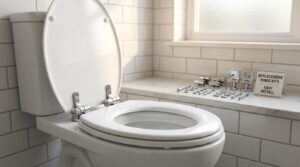
- Lift the plastic cover caps on the hinge bolts at the back of the seat (these snap or slide off).
- If it’s a bottom-fix seat, hold the bolt from the top with a screwdriver and unscrew the nut from underneath the bowl with a wrench. If bolts are rusted, spray WD-40 and wait 5 minutes.
- If it’s a top-fix seat, turn the hinge bolts anti-clockwise from above until the plastic anchor below the bowl releases.
- Lift the old seat and hinge assembly free. Clean the fixing hole area on the bowl thoroughly before fitting the new seat.
Phase 2: Install the New Seat or Hinge
- Align the new hinge bracket over the fixing holes. Confirm the bolt spacing matches your measurement.
- Insert the bolts through the hinge and down through the bowl holes. Hand-tighten the nuts from below — do not over-tighten as this can crack the ceramic bowl.
- Snap the hinge cover caps back into place. Test the seat by sitting on it — it should feel firm with zero lateral movement.
- For soft-close hinges, test the slow-close action by lifting the lid to 90° and releasing — it should close gently in 3–5 seconds without slamming.
Plumber Insight: “Never over-tighten the hinge bolts on a ceramic toilet. Finger-tight plus a quarter turn with the wrench is enough. Over-tightening is the number one cause of cracked toilet bowls during DIY seat replacement.”
Hard Water and Indian Climate Considerations
India’s water supply in cities like Surat, Jaipur, Delhi NCR, and Chennai is notoriously hard — with high calcium and magnesium content. This has a direct impact on the lifespan of toilet seat hinges and the toilet bowl surface around the fixing area. Hard water deposits (limescale) accumulate around hinge bolts and can seize them completely within 2–3 years.
How Hard Water Affects Toilet Seat Components
- Hinge bolt corrosion: Metal bolts in hard water areas oxidise faster. Opt for stainless steel or nylon bolts for longevity.
- Limescale buildup around hinges: Deposits lock the hinge in place and prevent proper cleaning — creating bacterial hotspots.
- Staining of seat underside: Hard water splash leaves permanent mineral stains on the underside of polypropylene seats.
- Plastic degradation: Chlorinated municipal water in some cities accelerates UV-like degradation of lower-grade plastic seats.
Monsoon and Humidity Impact
India’s monsoon season (June–September) brings sustained high humidity that affects bathroom fittings significantly. Wooden or MDF-core toilet seats can swell and warp within a single monsoon season if not properly sealed. Even plastic seats are affected — the hinge area accumulates moisture and mould grows in the gap between the hinge and the ceramic bowl.
- Apply a thin bead of silicone sealant around the base of hinge mounts if you notice water pooling there
- Wipe down the hinge area weekly during monsoon months
- Choose duroplast seats if you’re in a high-humidity coastal city like Mumbai, Kochi, or Vizag
- Replace plastic hinge nuts with stainless steel equivalents for longer life in hard water zones
Maintenance and Longevity Tips
The difference between a toilet seat that lasts 5 years and one that lasts 12 years often comes down to simple maintenance habits. Most Indian homeowners use the wrong cleaning products on toilet seats — and this single mistake shortens lifespan by years.
Cleaning Do’s and Don’ts
- DO: Use mild liquid soap or bathroom cleaner diluted in water for daily cleaning
- DO: Wipe hinges dry after cleaning — moisture accelerates corrosion
- DO: Apply a thin coat of petroleum jelly to hinge pivot points every 6 months
- DON’T: Use acid-based cleaners (HCL bathroom cleaners) directly on the seat — they degrade plastic within months
- DON’T: Scrub with abrasive pads — micro-scratches harbour bacteria and cause yellowing
- DON’T: Leave wet mops or cloths draped over the seat for extended periods
Annual Maintenance Checklist
- Check hinge bolt tightness — re-tighten if there’s any wobble (hand-tight + quarter turn only)
- Inspect the seat underside for hairline cracks — especially around the hinge attachment points
- Check the soft-close mechanism if fitted — apply silicone lubricant if closing speed has increased
- Descale hinge area with a diluted white vinegar solution (1:1 with water) in hard water cities
- Replace rubber bumper pads (the small feet under the seat) if worn — these prevent seat movement and bowl scratching
Pro Tip: “The rubber bumpers under the toilet seat are the most overlooked component. When they wear out, the seat slides on the ceramic bowl and creates micro-scratches. Replace them every 2–3 years — they cost under ₹50 and are available on JKC Emart.”
How to Buy the Right Toilet Seat or Hinge Online
Ordering a toilet seat or hinge kit online without a plumber’s help is entirely possible — if you follow a systematic approach. The biggest risk is ordering the wrong size or an incompatible hinge type. Here are six practical steps to get it right the first time.
6 Steps to Order Confidently
- Identify your toilet brand and model: Check the toilet bowl for a brand stamp or embossed logo — usually on the back or underside of the rim. Common Indian brands include Parryware, Cera, Hindware, and Jaquar.
- Measure the fixing hole distance: Use a measuring tape to measure the centre-to-centre distance between the two bolt holes at the back of the toilet bowl. Note this in millimetres.
- Identify the seat shape: Indian toilets are either round (shorter, more common in older homes) or elongated/D-shape (more common in newer constructions and branded toilets).
- Determine if you need the full seat or just the hinge: If the seat body is crack-free, order only the hinge kit — it’s far more economical. If the seat is cracked, order the complete seat with hinges included.
- Check for soft-close compatibility: If your current seat had a soft-close mechanism, ensure the replacement hinge is also soft-close rated. Standard hinges are not interchangeable with soft-close hinges.
- Order from a verified source: Find the right toilet seat cover hinge for your brand on JKC Emart — all listings include brand compatibility, fixing distance, and material specifications so you can order with confidence.
Pro Tip: “When in doubt, take a photo of the underside of your toilet bowl showing the hinge bolt holes and WhatsApp it to the JKC Emart support team at +91 97269 54303. They’ll confirm compatibility before you order.”
- JKC Emart offers free shipping on orders above ₹499 — most hinge kits and seat orders exceed this threshold
- 7-day easy returns policy means you can order with confidence even if you’re unsure
- Products are also available on Amazon India for Prime delivery in major cities
- Email support: cu**********@******rt.in for technical compatibility queries
Ready to Order? Here Are the Top Picks:
Frequently Asked Questions
How long does a toilet seat last in India?
A standard polypropylene toilet seat in an Indian home lasts between 5 to 8 years under regular family use, while a duroplast or premium brand seat can last 10 to 15 years. The hinge is usually the first component to fail — often within 3–5 years in high-use bathrooms. Replacing just the hinge can extend the seat’s effective life by several more years without needing a full replacement. Environmental factors like hard water, high humidity, and harsh cleaning chemicals can significantly shorten lifespan.
Can I replace just the toilet seat hinge without buying a new seat?
Yes — in most cases, hinge-only replacement is the recommended and most economical approach. If the seat body itself is crack-free and in good condition, there’s no reason to replace the entire seat. Replacement hinge kits are available for all major Indian brands including Jaquar, Cera, Parryware, Hindware, and Johnson, priced between ₹80 and ₹800 depending on the brand and whether soft-close is required. The replacement process takes under 15 minutes and requires only a basic screwdriver and wrench.
How do I know which toilet seat will fit my toilet bowl?
The key measurement is the fixing hole centre-to-centre distance at the back of your toilet bowl — this typically ranges from 140mm to 185mm across Indian toilet brands. You also need to identify whether your toilet has a round or elongated bowl shape. Most Indian brands like Cera and Hindware use a 150–165mm fixing distance, while imported brands like Kohler and American Standard use 165–185mm. Check the JKC Emart product listings for brand-specific compatibility details, or contact their support team with a photo of your toilet for guidance.
What is the difference between a soft-close and a standard toilet seat hinge?
A soft-close hinge uses a hydraulic or pneumatic damper mechanism that slows the lid’s descent in the last 30–40% of its travel, preventing it from slamming onto the bowl. Standard hinges have no damping mechanism and allow the lid to fall freely. Soft-close hinges cost ₹200–₹600 more than standard ones but significantly reduce noise, prevent cracking of the seat and bowl from repeated impacts, and generally last longer because the mechanical stress of slamming is eliminated. In homes with children or elderly residents, soft-close hinges are strongly recommended.
Is it better to repair or replace a toilet seat in 2026?
In 2026, with toilet seat prices having risen 10–15% since 2022, the repair-first approach makes more economic sense than ever. If only the hinge is broken, a hinge kit replacement costing ₹150–₹500 is far preferable to buying a new seat at ₹600–₹4,500. However, if the seat body is cracked — even with hairline cracks — replacement is non-negotiable for hygiene reasons, as bacteria colonise cracks and cannot be cleaned out. A cracked seat also poses a safety risk as it can break under body weight. The rule of thumb: repair the hinge, replace the seat body.
Conclusion
Understanding toilet seat lifespan and replacement in India comes down to three things: knowing your seat’s material and age, identifying whether it’s the seat or the hinge that has failed, and ordering the right compatible part without overspending. The vast majority of toilet seat problems in Indian homes — wobbling, slamming, cracking at the hinge — are solved with a ₹150–₹500 hinge kit replacement, not a full seat purchase.
Whether you have a Jaquar, Cera, Parryware, Hindware, Roca, or Kohler toilet, genuine compatible hinge kits and replacement seats are available and ready to ship. JKC Emart stocks a comprehensive range of toilet seat cover hinges — including soft-close options, quick-release designs, and standard bottom-fix kits — all verified for compatibility with major Indian sanitaryware brands.
With free pan-India shipping on orders above ₹499, a 7-day easy returns policy, and availability on Amazon India for Prime delivery in metros, getting the right part has never been easier. Our expert support team at cu**********@******rt.in or +91 97269 54303 can help you confirm compatibility before you order. Don’t wait for a cracked seat to become a safety issue — fix it today with a genuine spare part.
About author


Add comment
You must be logged in to post a comment.