
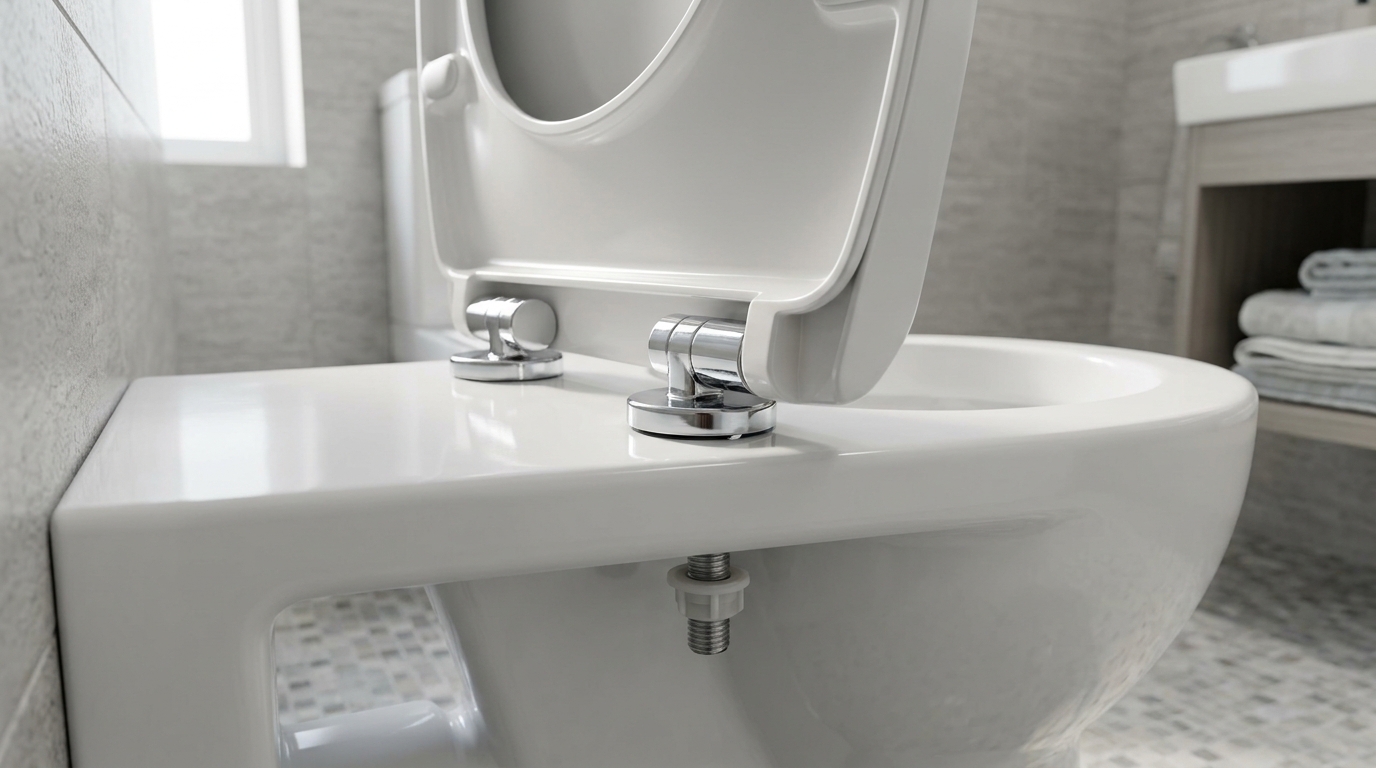
Why is My Toilet Seat Loose? Fix Hinges & Bolts Guide 2026
Table of Contents
- 2026 Price Guide for Toilet Seat Hinges Replacement
- Signs You Need to Replace Your Toilet Seat Hinges
- Brand Compatibility Guide for Indian Sanitaryware
- Step-by-Step DIY Replacement Guide
- Common Mistakes When Replacing Toilet Seat Hinges
- How to Measure and Order the Correct Size Online
- How to Buy the Right Spare Part Online
- Frequently Asked Questions
- Conclusion
Your toilet seat keeps sliding around every time someone sits down, making that annoying clicking sound that echoes through your Vadodara apartment at 6 AM. The hinges have worn out after years of daily use, and now the entire seat shifts left and right no matter how much you try to tighten those stubborn bolts. Instead of calling a plumber for what seems like a simple fix, you can easily handle toilet seat hinges replacement yourself with the right parts and guidance. Quality toilet seat cover hinges from trusted brands can restore stability to your bathroom fixture within minutes.
2026 Price Guide for Toilet Seat Hinges Replacement
Understanding the current market rates for toilet seat hinges helps you budget effectively for this essential bathroom repair. Prices have increased by approximately 12-15% since 2024 due to raw material costs and increased demand for quality sanitaryware components. The Indian market offers three distinct price tiers based on material quality, brand reputation, and durability expectations.
Here’s the comprehensive pricing breakdown for toilet seat hinges in 2026:
| Category | Price Range (INR) | Brand Examples | Material Quality | Installation Cost | Total Cost |
|---|---|---|---|---|---|
| Generic/Basic | ₹150 – ₹350 | Local unbranded, basic plastic | Standard plastic, basic metal | ₹200 – ₹300 | ₹350 – ₹650 |
| Standard/Mid-Range | ₹400 – ₹800 | Essco, ARK, LnK, Goldline | Reinforced plastic, stainless steel | ₹250 – ₹400 | ₹650 – ₹1,200 |
| Premium/Branded | ₹900 – ₹2,500 | Jaquar, Cera, Parryware, Hindware | Marine-grade steel, brass fittings | ₹300 – ₹500 | ₹1,200 – ₹3,000 |
Key factors affecting pricing include:
- Material composition (plastic vs. stainless steel vs. brass)
- Load-bearing capacity and durability rating
- Brand reputation and warranty coverage
- Soft-close mechanism inclusion
- Corrosion resistance for humid Indian climates
Plumber’s Tip: Investing in mid-range to premium hinges saves money long-term. Cheap plastic hinges typically fail within 18-24 months, while quality stainless steel hinges last 5-7 years even with heavy daily use.
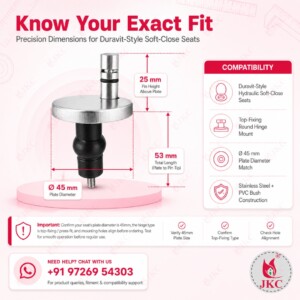
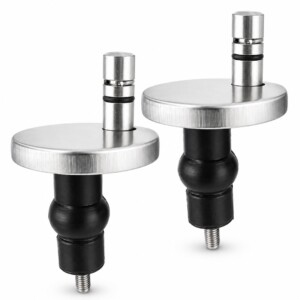
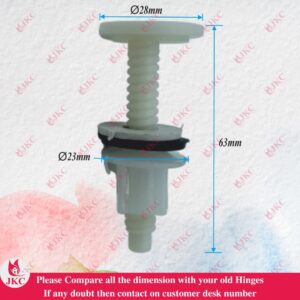
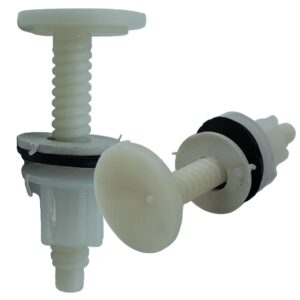
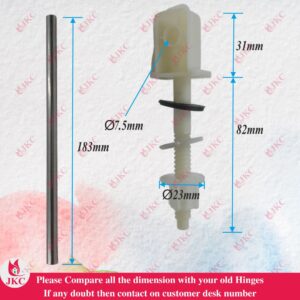
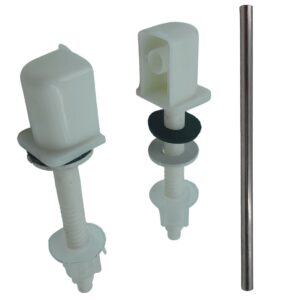
Shop These Parts on JKC Emart:
Signs You Need to Replace Your Toilet Seat Hinges
Recognizing the early warning signs of failing toilet seat hinges prevents complete failure and potential damage to your toilet bowl. Most homeowners ignore these symptoms until the seat becomes completely unusable, leading to emergency repairs at inconvenient times. Understanding these indicators helps you plan replacement during convenient hours with proper tools and parts ready.
Physical Movement and Instability
The most obvious sign is excessive movement when someone sits on the toilet seat. The seat slides from side to side, rocks back and forth, or tilts at awkward angles. This instability occurs when the hinge pins wear down or the mounting holes in the toilet bowl become enlarged from constant stress.
Specific symptoms to watch for:
- Seat shifts more than 5mm in any direction when pressure is applied
- Audible clicking or rattling sounds during normal use
- Visible gaps between the seat and toilet bowl rim
- Difficulty keeping the seat in the closed position
Visible Wear and Damage
Inspect your hinges monthly for signs of deterioration that indicate imminent failure. Plastic components crack under stress, while metal parts show rust, corrosion, or wear patterns. These visual cues help you replace hinges before they break completely during use.
- Cracks in plastic hinge bodies: Small hairline cracks expand rapidly under daily stress
- Rust or corrosion on metal components: Particularly common in coastal cities like Mumbai or Chennai
- Worn mounting holes: Oval-shaped holes instead of perfect circles indicate excessive wear
- Missing or damaged washers: These small components prevent metal-on-ceramic contact
Expert Insight: Hard water areas like Delhi and Gurgaon see 30% faster hinge deterioration due to mineral deposits. Regular cleaning with mild acid solutions extends hinge life significantly.
Brand Compatibility Guide for Indian Sanitaryware
Understanding which toilet seat hinges work with your specific toilet brand prevents costly ordering mistakes and ensures proper fit. Indian sanitaryware manufacturers use standardized mounting dimensions, but subtle variations in hole spacing and depth requirements exist between brands. This compatibility guide helps you select the correct replacement parts for your existing toilet setup.
Universal Fit vs. Brand-Specific Requirements
Most modern Indian toilets use standard mounting hole spacing, but premium brands often have proprietary requirements. Browse compatible toilet seat hinges that match your specific brand requirements for guaranteed fit and performance.
Universal compatibility brands (standard 5.5″ spacing):
- Parryware standard models
- Hindware basic series
- Cera economy range
- ESS ESS standard toilets
- Most local and regional brands
Premium Brand Specific Requirements
Luxury sanitaryware brands often use specialized mounting systems that require exact replacement parts. These brands prioritize aesthetics and functionality, resulting in unique hinge designs that don’t interchange with standard options.
Brand-specific requirements:
- Jaquar: Often uses soft-close mechanisms with specific torque requirements
- Kohler: Proprietary quick-release systems in premium models
- Grohe: Specialized mounting plates and adjustment mechanisms
- Duravit: Integrated hinge designs with specific angle requirements
- Roca: European-style mounting with metric threading
Compatibility Tip: Always check your toilet’s model number or measure existing hinge spacing before ordering. JKC Emart’s customer support can help identify the correct part based on your toilet’s brand and model.
Browse Compatible Parts:
Step-by-Step DIY Replacement Guide
Replacing toilet seat hinges is a straightforward DIY project that most homeowners can complete in 15-20 minutes with basic tools. This comprehensive guide walks you through each phase of the replacement process, from preparation to final testing. Following these steps ensures proper installation and prevents common mistakes that lead to premature failure.
Tools and Materials Required
Gather all necessary tools before starting to avoid interruptions during the replacement process. Having the right equipment makes the job easier and reduces the risk of damaging your toilet or new hinges during installation.
Essential tools list:
- Adjustable wrench or pliers
- Flathead and Phillips head screwdrivers
- Measuring tape for verification
- Clean cloth for wiping surfaces
- Mild detergent for cleaning
- Flashlight for better visibility
Phase 1: Removal of Old Hinges
Start by removing the old toilet seat and hinges completely. This phase requires patience as old bolts may be corroded or stuck due to years of use and mineral deposits. Work systematically to avoid damage to the toilet bowl’s mounting holes.
- Close the toilet seat and lid to access the hinge bolts underneath
- Locate the mounting nuts under the toilet bowl rim, typically plastic wing nuts
- Hold the bolt head steady while turning the nut counterclockwise
- Remove both hinges and set aside the old seat assembly
- Clean the mounting area thoroughly with mild detergent
Phase 2: Installation of New Hinges
Install the new hinges by reversing the removal process, ensuring proper alignment and secure mounting. Take time to position everything correctly before final tightening to prevent stress on the ceramic toilet bowl.
Installation sequence:
- Insert new hinge bolts through the mounting holes from above
- Place washers and nuts underneath, hand-tightening initially
- Attach the toilet seat to the hinges according to manufacturer instructions
- Test movement and adjust positioning as needed
- Final tightening with tools, avoiding over-torquing
Installation Warning: Never over-tighten mounting bolts as this can crack the toilet bowl. Snug fit is sufficient – the weight of the seat provides additional stability.
Common Mistakes When Replacing Toilet Seat Hinges
Learning from common installation errors saves time, money, and prevents damage to your toilet. These mistakes occur frequently among DIY enthusiasts and can lead to premature hinge failure, toilet damage, or poor functionality. Understanding these pitfalls helps you avoid costly repairs and ensures successful replacement.
Mistake 1: Incorrect Size Selection
Many homeowners assume all toilet seat hinges are universal, leading to poor fit and functionality issues. Standard mounting hole spacing varies slightly between manufacturers, and using the wrong size creates stress points that cause early failure.
How to avoid this mistake:
- Measure existing hole spacing center-to-center before ordering
- Check your toilet’s brand and model number for specific requirements
- Verify thread pitch on metal bolts (metric vs. standard)
- Consider seat shape compatibility (round vs. elongated)
Mistake 2: Over-Tightening Installation Hardware
Excessive force during installation is the leading cause of cracked toilet bowls and damaged hinges. Ceramic toilets are brittle and can crack under excessive pressure, leading to expensive replacement costs that far exceed the hinge price.
Proper tightening technique:
- Hand-tighten nuts until snug against the toilet bowl
- Use tools for only 1/4 to 1/2 additional turn
- Stop immediately if you feel significant resistance
- Test stability gently before applying full weight
Mistake 3: Ignoring Washer and Gasket Placement
Small rubber washers and gaskets prevent metal-on-ceramic contact and provide cushioning for the mounting system. Omitting these components or installing them incorrectly leads to loose connections and potential toilet damage over time.
Professional Tip: Always replace washers and gaskets even if the old ones look acceptable. New sealing components ensure proper load distribution and prevent future loosening.
Mistake 4: Rushing the Alignment Process
Poor alignment during installation creates uneven stress distribution and affects seat functionality. Taking time to properly position hinges prevents wobbling, premature wear, and user discomfort during daily use.
Alignment checklist:
- Ensure equal spacing from toilet bowl edges
- Verify seat closes completely against the bowl rim
- Check that lid rests properly when closed
- Test smooth opening and closing motion
How to Measure and Order the Correct Size Online
Accurate measurements ensure you receive the correct toilet seat hinges for your specific toilet model. Online ordering requires precise specifications since you cannot physically test fit before purchase. This systematic approach to measuring and specification gathering eliminates guesswork and prevents costly returns or exchanges.
Critical Measurements to Take
Three key measurements determine hinge compatibility with your toilet. These dimensions must match exactly for proper fit and function, so take multiple measurements to ensure accuracy.
Essential measurement points:
- Hole center-to-center distance: Measure between the centers of both mounting holes
- Hole diameter: Measure the actual hole size in the toilet bowl
- Bowl width: Distance from front to back where hinges will mount
- Seat shape: Round or elongated toilet bowl configuration
Documentation and Specification Gathering
Beyond physical measurements, collecting your toilet’s specifications helps identify exact replacement parts. Modern toilets often have model numbers and manufacturing details that simplify parts identification.
Information to gather:
- Toilet brand name and model number (usually inside the tank or on the bowl)
- Manufacturing date if visible
- Current hinge brand and part numbers
- Photos of existing hinges and mounting area
- Any special features like soft-close mechanisms
Online Ordering Best Practices
When ordering online, provide detailed specifications and ask questions before purchase. Reputable suppliers offer technical support to help match parts correctly, reducing the likelihood of ordering incorrect components.
Ordering Tip: Save photos and measurements in your phone for easy reference when browsing online catalogs. This information helps customer service representatives identify the exact parts you need.
How to Buy the Right Spare Part Online
Successfully purchasing toilet seat hinges online requires understanding product specifications, reading reviews effectively, and choosing reliable suppliers. The abundance of options can be overwhelming, but following these practical guidelines ensures you receive quality parts that fit correctly and perform reliably. Smart online shopping saves both time and money while avoiding the frustration of incorrect parts.
Research Product Specifications Thoroughly
Start by comparing your measurements with detailed product specifications listed on retailer websites. Quality online stores provide comprehensive technical details including dimensions, materials, load capacity, and compatibility information. Cross-reference these specifications with your toilet’s requirements before adding items to your cart.
Key specification areas to verify:
- Mounting hole spacing and diameter tolerances
- Material composition and corrosion resistance ratings
- Weight capacity for daily use requirements
- Warranty coverage and replacement policies
- Installation hardware inclusion (bolts, washers, nuts)
Evaluate Seller Reputation and Support
Choose established retailers with strong customer service records and technical support capabilities. Reputable sellers like JKC Emart’s toilet seat hinge collection offer expert guidance, genuine parts, and hassle-free returns if parts don’t fit correctly.
- Check customer reviews: Look for feedback about fit, quality, and durability
- Verify return policies: Ensure easy returns if parts don’t match your toilet
- Confirm technical support: Access to experts who can help with part selection
- Review shipping options: Fast delivery for urgent repairs
Compare Prices Across Quality Tiers
Balance cost considerations with quality requirements for your specific situation. While premium hinges cost more initially, they often provide better value through longer service life and superior performance in Indian climate conditions.
Price comparison strategy:
- Calculate total cost including shipping and installation
- Consider warranty value and replacement frequency
- Factor in time savings from reliable, long-lasting parts
- Evaluate bulk purchase discounts for multiple bathrooms
Utilize Customer Service Resources
Take advantage of technical support services offered by quality retailers. Experienced customer service representatives can help identify correct parts based on your toilet specifications and answer installation questions before purchase.
Support Tip: Contact customer service with your measurements and toilet model information before ordering. This consultation prevents ordering mistakes and ensures you receive exactly what you need.
Plan for Installation and Testing
Order installation supplies alongside your hinges to complete the project efficiently. Having everything ready prevents delays and ensures professional-quality results from your DIY repair project.
Complete order checklist:
- Replacement hinges with all mounting hardware
- Thread-locking compound for secure installation
- Cleaning supplies for preparation
- Basic tools if not already available
Ready to Order? Here Are the Top Picks:
Frequently Asked Questions
How long do toilet seat hinges typically last in Indian homes?
Quality toilet seat hinges generally last 3-5 years with regular daily use in typical Indian household conditions. However, this lifespan varies significantly based on material quality, usage frequency, and local water conditions. Premium stainless steel or brass hinges from brands like Jaquar or Cera can last 7-10 years even with heavy use, while basic plastic hinges may need replacement every 18-24 months. Hard water areas like Delhi, Gurgaon, and parts of Rajasthan see faster deterioration due to mineral deposits, while coastal cities experience corrosion from salt air exposure. Regular cleaning and proper installation significantly extend hinge life regardless of material quality.
Can I replace just one hinge if only one side is broken?
While technically possible, replacing just one hinge is not recommended for optimal performance and safety. Toilet seat hinges work as a matched pair, and mixing old with new creates uneven stress distribution that can damage your toilet bowl or cause the seat to sit improperly. New hinges have different tension characteristics than worn ones, leading to wobbling and instability even if the old hinge appears functional. The cost difference between single and paired hinges is minimal, typically ₹100-200 extra for the complete set. Professional plumbers always recommend replacing both hinges simultaneously to ensure balanced operation, extended lifespan, and user safety during daily use.
What’s the difference between soft-close and regular hinges?
Soft-close hinges incorporate hydraulic or pneumatic dampening mechanisms that control closing speed, preventing the loud slamming noise of regular hinges. These mechanisms use fluid-filled cylinders or spring-loaded systems to gradually slow the seat and lid as they approach the closed position. Regular hinges rely purely on gravity and user control, making them less expensive but potentially noisy and prone to impact damage. Soft-close hinges typically cost ₹300-800 more than standard options but provide significant benefits including reduced noise, prevention of lid/seat cracking from impact, and improved user experience. However, soft-close mechanisms can fail over time, requiring complete hinge replacement rather than simple repairs that regular hinges allow.
How do I know if my toilet uses standard or metric threading?
Most Indian toilets manufactured after 2010 use standard threading (measured in inches), while some imported or premium European brands use metric threading (measured in millimeters). Check your existing hinge bolts with a thread gauge or by testing with standard nuts from a hardware store – standard bolts typically measure 1/4″ or 5/16″ diameter, while metric versions are usually 6mm or 8mm. European brands like Grohe, Duravit, and Roca commonly use metric threading, while Indian brands like Parryware, Hindware, and Cera typically use standard measurements. If unsure, take your old bolt to a hardware store for identification, or contact the toilet manufacturer with your model number. Using the wrong threading can damage mounting holes and create loose, unsafe installations.
Are expensive branded hinges worth the extra cost?
Premium branded hinges justify their higher cost through superior materials, better engineering, longer warranties, and consistent availability of replacement parts. Brands like Jaquar, Cera, and Kohler use marine-grade stainless steel, precision-machined components, and rigorous quality testing that generic alternatives often skip. These hinges typically last 2-3 times longer than budget options, making them more economical over time despite higher initial investment. Premium hinges also maintain their appearance and function better in challenging Indian conditions like hard water, high humidity, and temperature variations. Additionally, branded hinges often include better installation hardware, clearer instructions, and customer support for troubleshooting. However, for rental properties or budget-conscious situations, mid-range options from brands like Essco or ARK provide good balance between cost and performance.
Conclusion
A loose toilet seat is more than just an annoyance – it’s a clear signal that your toilet seat hinges need immediate attention. Throughout this guide, we’ve covered everything from identifying the warning signs to selecting the right replacement parts for your specific toilet brand and model. Whether you’re dealing with a wobbly seat in your Mumbai apartment or planning a bathroom upgrade in Bangalore, the right hinges make all the difference in daily comfort and functionality.
The key to successful toilet seat hinge replacement lies in accurate measurement, quality part selection, and proper installation technique. While the initial investment in premium hinges might seem higher, the long-term benefits of durability, reliability, and user satisfaction make it a wise choice for most Indian households. Remember that over-tightening during installation is the most common mistake that leads to expensive toilet bowl damage.
JKC Emart offers genuine, compatible toilet seat hinges for all major Indian sanitaryware brands, backed by expert customer support and technical guidance. With pan-India free shipping on orders above ₹499, 7-day easy returns, and availability on Amazon India, getting the right parts for your toilet repair has never been easier. Don’t let a loose toilet seat disrupt your daily routine any longer. Browse All Spare Parts at JKC Emart


About author



Add comment
You must be logged in to post a comment.